Tulsi tea vs capsules: both contain preparations of holy basil, but they are not interchangeable. A tea is a brewed infusion of plant material; a capsule may contain powdered leaves or a more concentrated extract. Those differences matter for ingredient identification, exposure, convenience, safety and the claims you see on the label.
People often search for the “best” tulsi format for stress, sleep or general wellness. A more useful question is: What are you actually buying, how will you use it, and what does the evidence support? This guide explains the practical trade-offs without promising that either form treats a health condition.
What exactly is tulsi (holy basil)?
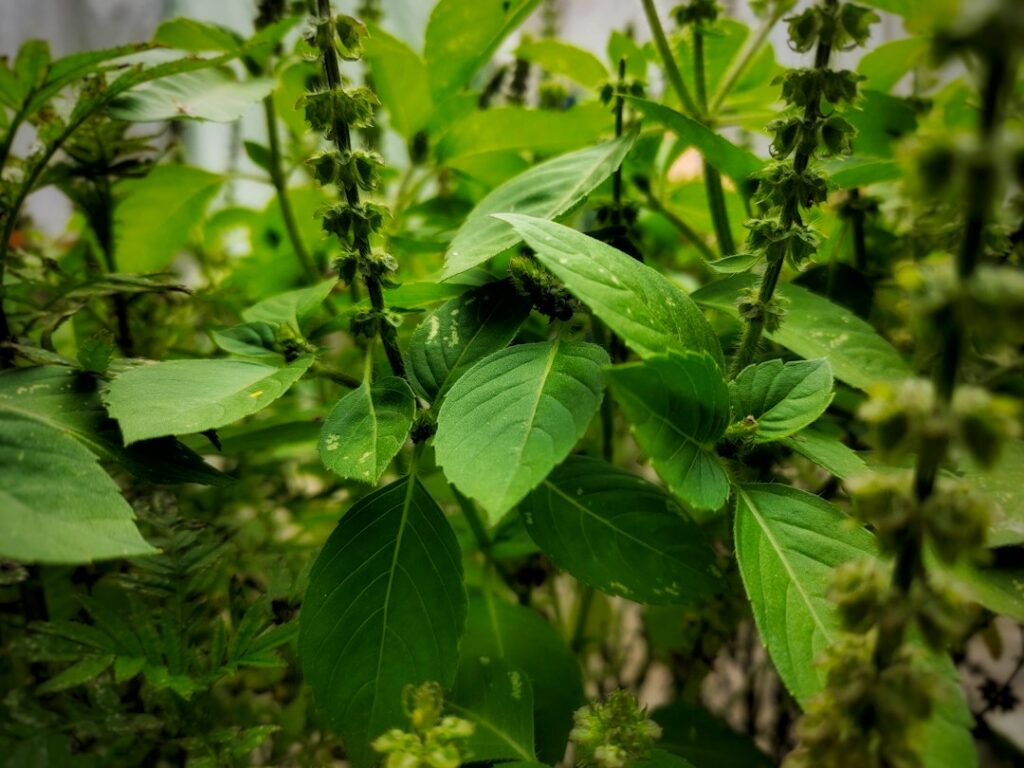
Tulsi is an aromatic plant used in traditional Ayurvedic and household practices. The botanical name commonly associated with holy basil is Ocimum tenuiflorum, also known by the synonym Ocimum sanctum. It is not the same as ordinary sweet basil (Ocimum basilicum) used in many cuisines. The distinction matters because online listings may use the word “basil” loosely.
Different tulsi varieties are described in traditional practice, including Rama and Krishna tulsi. Products may contain different plant parts, blends or extracts. Therefore, the word “tulsi” on a front label does not tell you the exact amount or type of botanical material in the finished product. Look for the scientific name, plant part and complete ingredient list on the actual package.
Traditionally, tulsi leaves have been steeped as a drink and used in wider wellness practices. Traditional use is meaningful cultural context, but it is not the same as clinical evidence that a particular supplement prevents or cures a disease. Research results for one proprietary extract cannot automatically be transferred to every home-brewed tea or powder capsule.
Tulsi tea vs capsules: the practical differences
| Feature | Tulsi tea | Tulsi capsules |
|---|---|---|
| What it is | Hot-water infusion of leaves or a herbal blend | Powdered herb or extract enclosed in a capsule |
| Amount consumed | Depends on leaves, water, brewing and blend | Label gives an amount, but extracts vary |
| Routine | Requires preparation; offers a warm-drink ritual | Portable and convenient |
| Added ingredients | May include ginger, mint, spices or other herbs | May include extracts, fillers or other botanicals |
| Best reason to choose | You enjoy an unsweetened herbal beverage | You prefer a clearly labeled supplement format |
| Main caution | Unknown extraction and hidden blend ingredients | Potentially higher exposure; medication interactions |
Important: a “500 mg” capsule and a cup of tea cannot be compared milligram-for-milligram. A capsule labeled 500 mg might contain ground leaves, while another may contain an extract. Extraction ratio, standardization, plant part and testing all influence what that number means.
What benefits does the research actually support?
Stress and everyday mood
Small human studies have explored tulsi preparations for perceived stress and related symptoms. A 2017 systematic review of 24 human studies described encouraging signals across several outcomes, but the studies varied substantially in quality, products and design. Results should be treated as preliminary, not proof that any tulsi product treats anxiety or stress-related disorders.
For daily stress, sleep regularity, movement, realistic workloads and social support remain important. A calming cup of herbal tea can be part of an enjoyable routine, but the ritual itself may contribute to how relaxing it feels. If anxiety, panic or low mood interferes with life, seek qualified care rather than escalating herbal doses.
Sleep quality
Tulsi is often marketed as a bedtime herb. However, evidence does not establish tulsi tea or capsules as a reliable treatment for insomnia. Some products combine tulsi with other botanicals, making it especially difficult to attribute a result to tulsi alone. Consistent wake times, a comfortable sleep environment and limiting late caffeine are better-established starting points.
Blood sugar and metabolic markers
Some small studies have assessed glucose and metabolic measures, but the evidence is insufficient to replace established diabetes management. More importantly, a potential glucose-lowering effect means a supplement could interact with prescribed glucose-lowering medicine. People taking insulin or certain diabetes tablets should not add tulsi supplements without discussing monitoring and interactions with their clinician.
Immunity, coughs and “detox” claims
Laboratory findings about antioxidant or antimicrobial activity do not demonstrate that a brewed tea prevents infections in people. “Boosts immunity” and “detoxifies the body” are broad marketing phrases, not clearly measured clinical outcomes. Tulsi should not be presented as a treatment for colds, asthma, infections or liver disease. For persistent cough, wheezing, fever or breathing difficulty, seek appropriate medical assessment.
The MSD Manual overview of holy basil emphasizes that claimed benefits have not been confirmed in high-quality studies. That cautious conclusion is a useful counterbalance to overly enthusiastic product claims.
Why the formulation matters more than the format name
Whole leaf, powdered herb and extract are different
In a tea, soluble compounds move from plant material into water during steeping. A whole-herb capsule contains dried material that is swallowed, while an extract capsule may use a processing method designed to concentrate particular constituents. These are different exposures, and there is no simple conversion from a cup of tea to a capsule dose.
A standardized extract may state the amount of a marker compound. Standardization can help describe consistency, but it does not by itself prove clinical effectiveness or safety. Nor does “stronger” automatically mean “better.” If a label does not clearly identify whether it is whole herb or extract, consider that a reason to ask the seller for details.
Blended teas deserve a second look
A blend sold as tulsi tea might also contain black tea, green tea, ginger, licorice, cinnamon or other ingredients. This changes flavour, caffeine content and potential interactions. Tulsi itself is not a caffeine-containing tea plant, but a tulsi blend can contain caffeine if ordinary tea leaves are added. Read the full ingredient list rather than assuming “herbal” means caffeine-free.
Quality and storage
Look for a readable ingredient panel, expiry date, batch or lot number, manufacturer or importer information, storage directions and a sealed package. Store according to the label and keep powders dry. A strong fragrance, dark colour or premium-looking box is not evidence of purity. If the supplier can provide meaningful quality documentation, that is more useful than vague claims such as “100% detox.”
A five-step checklist before buying tulsi
- Define your goal. If you simply want a warm, unsweetened drink, a clearly labeled tea may meet that preference without a supplement. If you are looking to treat a medical condition, ask a clinician about evidence-based options.
- Identify the plant. Check for Ocimum tenuiflorum/O. sanctum, the plant part and whether the product is a blend.
- Understand the formulation. For capsules, distinguish powdered herb from extract. Check amount per serving, number of capsules and any standardization details.
- Screen for interactions. Pregnancy plans, breastfeeding, thyroid disease, diabetes medicines, blood thinners and upcoming surgery are reasons to seek medical guidance or avoid supplemental use.
- Compare value fairly. Price per capsule or teabag is not a measure of active-ingredient equivalence. Compare labeling, quality assurance and suitability rather than choosing the largest number on the front panel.
Our broader guide to Ayurvedic supplement labels and authenticity explains additional checks to make before ordering online.
How tulsi might fit into a practical routine
If you choose a tea
Follow the preparation instructions on the specific tea package. A straightforward routine is to brew a fresh cup at a time, avoid adding large amounts of sugar, and notice whether the beverage agrees with you. Do not assume that brewing for longer increases clinical benefits; it can simply change flavour and extraction. If you are pregnant, trying to conceive, breastfeeding or managing a medical condition, check suitability first rather than assuming a tea is harmless.
If you choose capsules
Read the actual package directions and consult a healthcare professional if you use medications or have health conditions. There is no evidence-based universal dose that applies to all tulsi extracts, and study doses cannot be transferred to products with different compositions. Do not exceed the product’s instructions or combine multiple tulsi supplements in an attempt to get faster results.
Track outcomes without overinterpreting them
If your aim is a more settled evening, keep a simple record of sleep timing, late caffeine, stressors and any unwanted symptoms. Changing several habits at once makes it hard to know what helped. A single good night after trying a new tea does not establish cause and effect. Persistent insomnia or significant daytime fatigue deserves proper evaluation.
For other practical habits, explore our night-routine guide and evidence-aware everyday stress guide.
Tulsi safety: side effects and who should be cautious
Side effects reported with oral holy basil include nausea and diarrhoea. Research on prolonged use is limited. Safety depends on the preparation, amount, other ingredients and individual circumstances; a product being plant-derived does not make it free of interactions.
- Pregnancy, conception and breastfeeding: Avoid medicinal or supplemental use unless a qualified clinician specifically advises otherwise. There are concerns from animal research and inadequate human safety data.
- Diabetes medicines: Tulsi may add to glucose-lowering effects, increasing the risk of low blood sugar with some treatments.
- Anticoagulants or antiplatelet medicines: Potential effects on clotting raise concerns about bleeding or bruising.
- Thyroid conditions or thyroid medicines: Possible effects on thyroxine make professional advice important, particularly with hypothyroidism.
- Upcoming surgery: Tell the surgical team about all herbal supplements well in advance; do not wait until the day of the procedure.
- Allergy or intolerance: Stop if you develop rash, swelling, digestive upset or other concerning symptoms, and seek urgent help for severe reactions.
These cautions are summarized in the Merck Manual’s professional holy basil reference. The 2026 Drugs.com professional monograph also notes that limited clinical evidence prevents a reliable general dosing recommendation.
Seek care promptly for unusual bleeding, fainting, signs of hypoglycaemia, severe allergic symptoms or symptoms that are persistent or worsening. Do not discontinue prescribed medicine in favour of a botanical product.
Five common tulsi myths, explained
- “Tea and capsules have the same strength.” Not necessarily. Plant amount, extraction and formulation differ.
- “Natural means safe for everyone.” Incorrect. Medicines, pregnancy and existing conditions can change the risk.
- “A high milligram number proves quality.” No. Identity, testing, ingredient disclosure and product suitability matter.
- “Tulsi cures anxiety or insomnia.” Human evidence is preliminary and does not establish either as a proven treatment.
- “More tulsi works faster.” No reliable evidence supports dose escalation; higher exposure can increase risk.
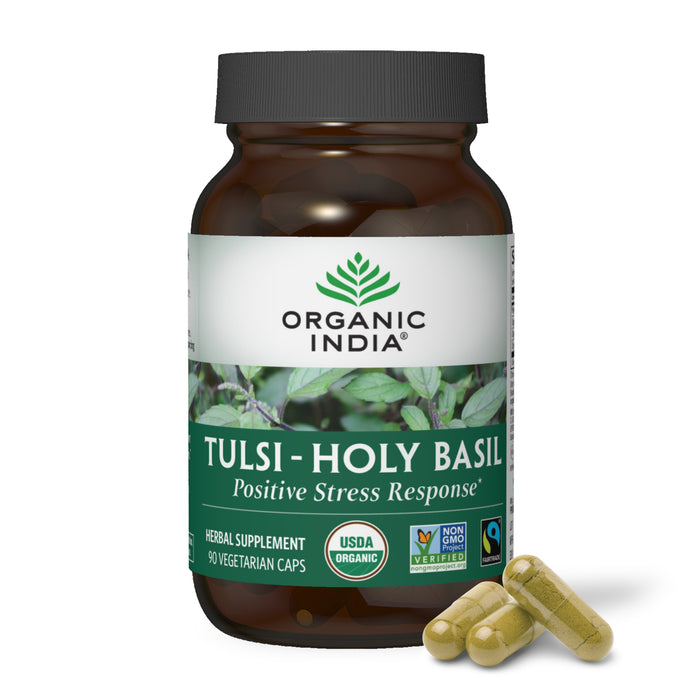
RELATED PRODUCT · CAPSULE FORMAT
Organic India Tulsi Holy Basil — 90 Vegetarian Capsules
Explore the labeled capsule option if you prefer a supplement format. Review the current ingredients, serving directions and warnings on the product page and packaging before use. This product is not presented as a treatment for stress, insomnia, diabetes or other conditions.
When another approach may make more sense
If your priority is hydration or a pleasant evening beverage, a non-caffeinated drink that you enjoy may be enough. If you are managing anxiety, persistent insomnia, high blood sugar or another health condition, the first step is an assessment and an evidence-based care plan. Supplements should never be used to postpone needed diagnosis.
For readers comparing traditional botanicals more generally, our Brahmi vs Ashwagandha comparison explains how different herbs are traditionally positioned and why claims need scrutiny. It is a related educational resource, not a reason to combine several supplements.
Frequently asked questions
Is tulsi tea better than tulsi capsules?
Neither is universally better. Tea is a beverage and capsules are a labeled supplement format. The ingredient identity, formulation, individual preference and safety profile determine which, if either, is appropriate.
Can I take tulsi capsules and drink tulsi tea together?
Combining products increases total exposure, which is difficult to quantify. There is no established added benefit. Ask a healthcare professional before combining herbal supplements, especially if you take medicines.
Is tulsi tea caffeine-free?
Tulsi itself is not a caffeine-containing tea plant, but blends may contain black or green tea. Check the ingredient list.
How long does tulsi take to work for stress?
No reliable universal timeline exists. Small studies have investigated specific preparations over weeks, but those results do not predict an individual response or prove effectiveness for every product.
What is the recommended tulsi capsule dose?
There is no established evidence-based dose for all tulsi products. Follow the specific package directions and consult a clinician about suitability and interactions rather than copying doses from unrelated studies.
Is tulsi safe with thyroid or diabetes medication?
Potential interactions warrant medical advice. Do not start concentrated tulsi supplements or alter prescribed treatment without speaking to your clinician.
Can pregnant people use tulsi supplements?
Medicinal or supplemental use is generally best avoided during pregnancy, breastfeeding and while trying to conceive because safety data are insufficient and animal research raises concerns.
Bottom line
Choose tulsi tea for the beverage experience, not an unproven cure. Consider capsules only after understanding the precise formulation and safety considerations. Neither format is a substitute for proven medical care. The best purchase is the one whose ingredients, quality and limitations you can actually understand.
Editorial safety note: This article is for general education and distinguishes traditional practice from clinical evidence. It is not individualized medical advice. No clinician review is claimed unless one has actually occurred.