
Ayurvedic Herbs for Everyday Stress Management: A Practical Guide
Stress is a normal response to pressure, but when it becomes persistent it can affect sleep, energy, appetite and day-to-day wellbeing. Ayurveda has a long tradition of using herbs alongside routines involving rest, movement and food. Modern research, however, does not support treating every traditional herb as a proven stress treatment.
This guide separates traditional use from current evidence and shows how to think about Ayurvedic herbs as one part of a broader wellness routine. Explore more practical guides in the Ayurveda Health Mart blog.
Start With the Basics: Stress Management Is Bigger Than a Supplement
The CDC recommends practical measures such as regular physical activity, adequate rest, healthy routines and social connection for managing everyday stress. Herbal products should complement—not replace—these foundations or professional mental-health care when it is needed.
If stress is persistent, overwhelming, causing major sleep disruption or interfering with work and relationships, speak with a qualified healthcare professional rather than relying on supplements alone.
Ashwagandha: The Best-Studied Ayurvedic Herb in This Area
Withania somnifera, commonly called Ashwagandha, has traditionally been used in Ayurveda as a restorative herb. Among Ayurvedic botanicals used for stress and sleep, it also has one of the larger modern research bases.
A 2024 systematic review and meta-analysis of nine randomized trials reported improvements in several stress- and anxiety-related measures with Ashwagandha formulations, while also noting that more information is needed on long-term safety. Another meta-analysis found potential benefits but rated the certainty of evidence low and reported substantial variation among studies. A newer 2026 review likewise concluded that promising signals remain limited by heterogeneity, small-study effects and reporting quality.
That distinction matters: results from a particular standardized extract cannot automatically be transferred to every powder, capsule, dose or formulation sold as Ashwagandha.
Powder, tablet or capsule?
Whole-herb powders and standardized extracts are different preparations. Check the label for the plant part, amount per serving and whether an extract is standardized. Do not assume that a larger milligram number automatically means a stronger or more effective product.
For a deeper ingredient overview, see our main Ashwagandha guide and our comparison of Brahmi vs Ashwagandha.
What About Brahmi and Other Traditional Herbs?
Brahmi is traditionally associated more strongly with cognition and mental wellbeing than with acute stress relief. Evidence for Ayurvedic botanicals varies by species, preparation and outcome. Rather than grouping all “adaptogenic” or calming herbs together, evaluate each ingredient separately.
Our Brahmi evidence and buying guide explains this distinction in more detail.
Relevant Products to Explore
If Ashwagandha fits your routine after reviewing the cautions below, these are current options available at Ayurveda Health Mart:
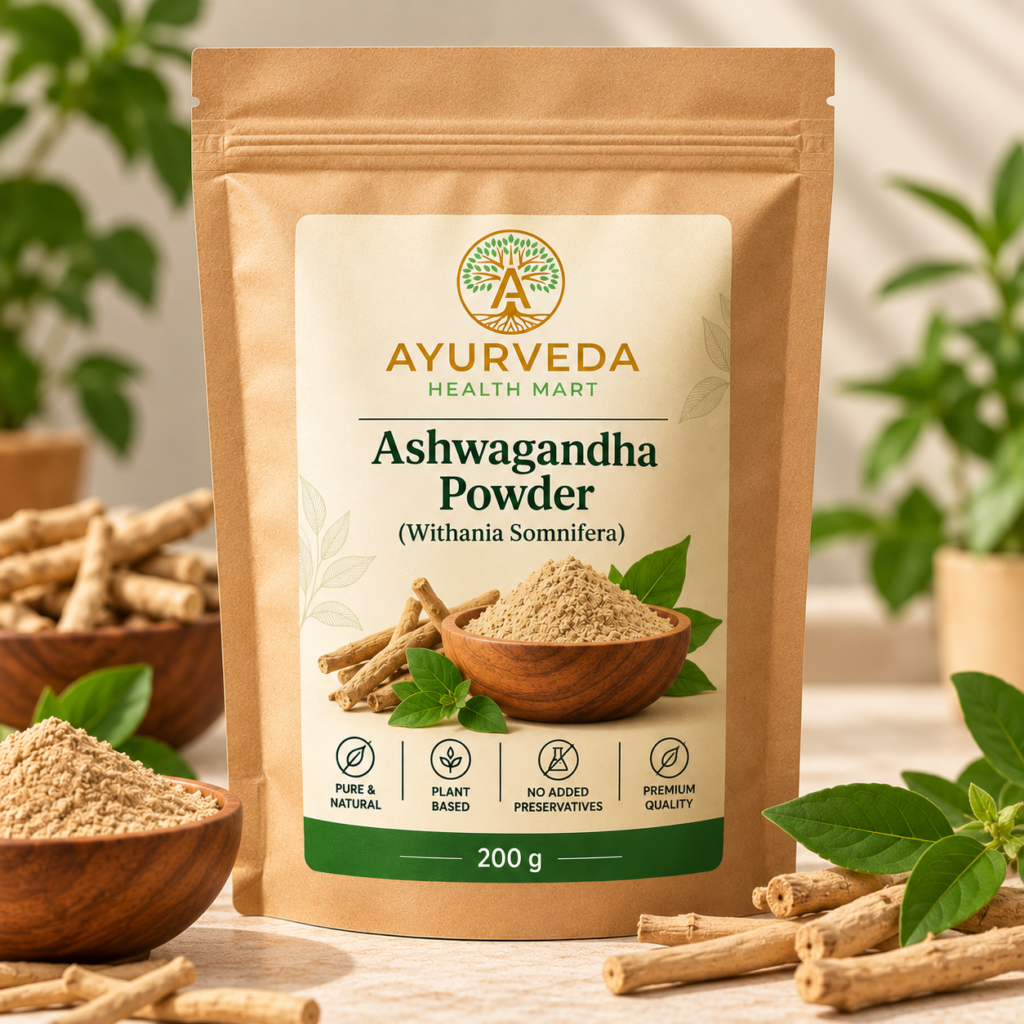
- Ayurveda Health Mart Ashwagandha Powder – 200 g — whole-herb powder format.
- Organic India Ashwagandha – 90 Vegetarian Capsules — convenient capsule format.
- Himalaya Ashwagandha 250 mg – 60 Tablets — tablet option for shoppers who prefer a fixed serving format.
These links are for product comparison, not a recommendation that Ashwagandha is appropriate for everyone.
A Practical Daily Stress Routine
Morning
Start with a consistent wake time, hydration, breakfast if that suits you, and a short period of movement or quiet breathing. Consistency is often more useful than adding multiple supplements at once.
During the day
Build in brief movement breaks, regular meals and realistic pauses from screens or work. The CDC notes that even short breaks, physical activity and connecting with other people can help people cope with stress.
Evening
Protect a regular wind-down period and avoid treating an herbal supplement as a substitute for sleep habits. If sleep is the main concern, our Ayurvedic night-routine guide discusses practical habits and herbal options.
Safety, Contraindications and Interactions
Herbal does not mean risk-free. NCCIH notes that supplements can interact with medicines; Ashwagandha may have sedative effects and could increase the effects of some sedative or anti-anxiety medicines. Tell your healthcare providers about all supplements you use.
Seek individualized medical advice before using Ashwagandha if you are pregnant or breastfeeding, have a thyroid, autoimmune or significant medical condition, are preparing for surgery, or take regular prescription medicines. If you develop a concerning reaction, stop the product and seek appropriate medical advice.
Do not stop prescribed anxiety, sleep or other mental-health medication in order to replace it with an Ayurvedic supplement without speaking to the clinician who manages your care.
How to Choose Without Overbuying
Start with one clearly labelled product rather than several overlapping blends. Check the botanical identity, plant part, serving information and other ingredients, and choose a format you can use consistently. Our Ayurvedic supplement buying guide covers label transparency and authenticity checks in more detail.
Frequently Asked Questions
Which Ayurvedic herb is best for stress?
There is no single “best” herb for everyone. Ashwagandha has comparatively more human research for stress-related outcomes, but study results vary and individual suitability depends on health conditions, medicines and the exact preparation.
Can I take Ashwagandha every day?
Clinical trials have generally studied defined products for limited periods. Long-term safety is less certain, so follow the specific product label and seek professional advice when ongoing use is being considered.
Can Ayurvedic herbs replace anxiety medication?
No. Do not replace prescribed treatment with supplements without medical guidance. Persistent or severe anxiety deserves professional assessment.
Can I combine several stress supplements?
Combining products can increase ingredient overlap and interaction risk. Review every ingredient and discuss combinations with a healthcare professional, particularly if you use medicines.
Final Takeaway
Ayurveda can offer a useful framework for thinking about routines, rest and traditional botanicals, but modern evidence should guide the strength of any health claim. Ashwagandha has promising clinical research for stress-related outcomes, yet formulations differ and uncertainties remain around long-term use.
If you decide to explore it, compare the Ashwagandha powder, Organic India capsules and Himalaya tablets, then choose based on the label, format and your individual circumstances rather than exaggerated promises.
References
- Arumugam V, et al. Effects of Ashwagandha on stress and anxiety: systematic review and meta-analysis. 2024.
- Akhgarjand C, et al. Ashwagandha supplementation for anxiety and stress: systematic review and meta-analysis.
- Systematic review of Ayurvedic herbal products for cognition, stress and sleep. 2026.
- NCCIH: How Medications and Supplements Can Interact.
This article is educational and is not intended to diagnose, treat, cure or prevent disease.