
How to Choose an Ayurvedic Supplement Online: Quality, Labels & Authenticity
Buying Ayurvedic supplements online gives you access to traditional herbs in powders, capsules and blended formulas—but a long product list can make it difficult to tell what is actually worth considering. A sensible buying decision starts with the label, the ingredient identity, the manufacturer and realistic expectations rather than dramatic health promises.
This guide explains practical quality checks you can use before buying an Ayurvedic product online. For more educational guides, visit the Ayurveda Health Mart blog.
1. Start With the Exact Herb and Plant Part
Look beyond the front-of-pack name. For botanical products, useful information includes the herb’s common or botanical name, the plant part used, the amount per serving where applicable, and whether the product is a powder or extract. These details matter because two products carrying the same herb name may not be equivalent.
For example, a plain root powder and a concentrated extract should not automatically be compared gram-for-gram. Likewise, a single-herb product is different from a multi-ingredient wellness blend.
2. Read the Full Label, Not Just the Marketing Headline
Useful details to check
- Ingredient name and quantity
- Plant part where relevant
- Serving or suggested-use information
- Other ingredients, fillers or capsule materials
- Manufacturer or distributor information
- Batch/lot and expiry information where supplied
- Storage instructions and relevant cautions
The U.S. NIH Office of Dietary Supplements notes that supplement labels can provide ingredient and serving information, but a label alone cannot establish a product’s overall quality. Good manufacturing practices and appropriate quality control remain important.
3. Treat “Natural” as a Description, Not a Safety Guarantee
Traditional use can help explain why an herb has a place in Ayurveda, but it is not the same thing as modern clinical evidence. The U.S. FDA specifically advises consumers not to assume that a product described as “natural” is automatically safe. Supplements may also interact with medicines, foods or other supplements.
Evidence varies considerably between Ayurvedic ingredients. NCCIH notes that only a limited number of Ayurvedic approaches have been studied in well-designed clinical trials, and some Ayurvedic preparations have raised concerns about contamination with toxic metals. That makes transparent sourcing and quality control especially relevant.
4. Be Cautious With Cure-All Claims
Claims that one supplement will “cure,” “guarantee” a result or work without side effects should be treated cautiously. Dietary supplements are not the same as approved medicines, and evidence from one formulation or study should not automatically be generalized to every commercial product containing the same herb.
A more credible product page should explain what the product contains, how it is intended to be used and appropriate cautions without promising medical outcomes.
5. Match the Format to How You Will Actually Use It
Powders can suit people who prefer measuring an ingredient themselves or adding it to a routine. Capsules and tablets are generally more convenient for travel and consistent serving sizes. Bundles may be useful when the ingredients genuinely fit the same wellness routine, but more ingredients do not automatically mean better results.
Choose based on ingredient transparency, convenience and your own needs—not simply the longest ingredient list.
Explore Relevant Ayurveda Health Mart Products
Prefer to compare clearly labelled single-herb powders and practical combinations? These live products are useful examples to review:
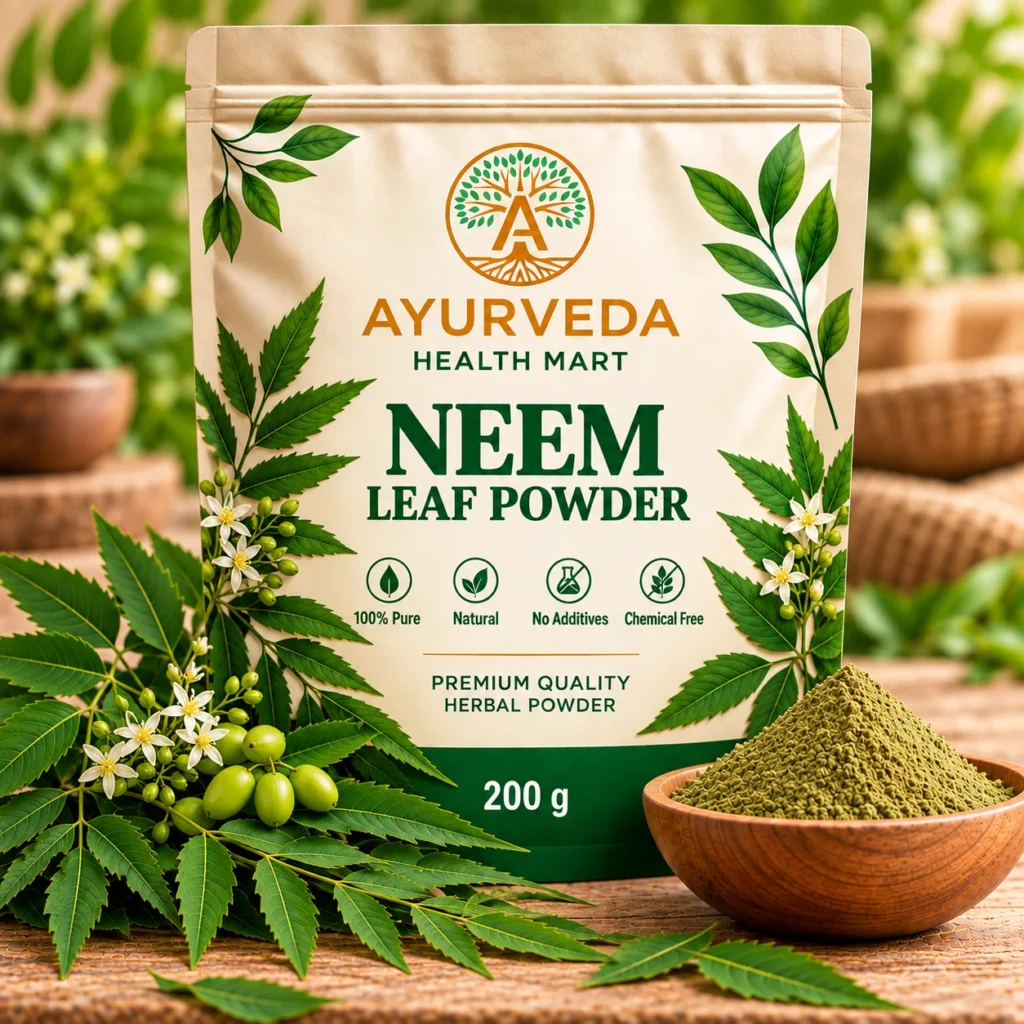
- Neem Leaf Powder – 200 g — a single-herb powder format.
- Shatavari Powder – 100 g — a traditional botanical powder; see our evidence-aware Shatavari guide before use.
- Daily Superfood Bundle – Moringa + Amla + Beetroot — a multi-product option for shoppers comparing individual powders with bundles.
Product availability can change. Product listings are for shopping information and do not imply that a product is suitable for every person.
6. Look for Quality Signals—But Understand Their Limits
Manufacturing and testing information can be useful quality signals. NIH ODS explains that good manufacturing practices are intended to help ensure identity, purity, strength and composition. Independent quality testing can add information about whether a tested product contains the labelled ingredients and avoids harmful levels of certain contaminants, but a quality seal does not prove that a supplement is effective or appropriate for you.
7. Check Whether the Evidence Matches the Product
When you see a research claim, ask whether the study used the same species, plant part, extract, dose and preparation. A trial involving a standardized extract does not necessarily establish the same effect for a traditional whole-herb powder.
For ingredient-specific examples, compare our guides on Brahmi for memory and focus and how to choose Shilajit. Both illustrate why formulation and evidence quality matter.
8. Consider Medicines, Pregnancy and Existing Health Conditions
Herbal supplements can have pharmacological effects and may interact with prescription or over-the-counter medicines. Before starting a new supplement, speak with a qualified healthcare professional if you are pregnant or breastfeeding, take regular medicines, have a chronic medical condition, are preparing for surgery, or are considering a supplement for a child.
Do not stop or replace prescribed treatment with an Ayurvedic supplement without discussing it with your clinician.
Quick Online Buying Checklist
- Can you identify the exact ingredient and form?
- Are quantity, directions and other ingredients clearly disclosed?
- Is manufacturer/distributor information available?
- Are claims realistic rather than disease-treatment promises?
- Is there useful batch, expiry, storage or quality information?
- Have you checked whether the herb may interact with your medicines?
- Does the cited research actually match the preparation being sold?
Frequently Asked Questions
Are Ayurvedic supplements safe because they are natural?
No. “Natural” does not guarantee safety. Herbs can cause adverse effects, interact with medicines, and vary in composition or quality. Product-specific cautions and professional guidance matter.
Is a more concentrated extract always better than a powder?
No. They are different preparations. The appropriate form depends on the ingredient, intended use, evidence, dose and individual circumstances.
Does a quality-testing seal prove that a supplement works?
No. Quality testing may provide useful information about manufacturing, identity or contaminants, but it does not establish clinical effectiveness.
Should I take several Ayurvedic herbs together?
Not automatically. Combining products increases the number of ingredients you need to evaluate and may increase interaction risks. Review the complete ingredient list and discuss combinations with a healthcare professional when appropriate.
Final Takeaway
A better Ayurvedic supplement purchase starts with transparency: know the herb, form, quantity, manufacturer, cautions and evidence behind the claims. Traditional Ayurvedic use can provide context, while modern research helps clarify what is known—and what remains uncertain.
When you are ready to compare options, browse Ayurvedic products at Ayurveda Health Mart and use the checks above before choosing a product.
References
- National Center for Complementary and Integrative Health: Ayurvedic Medicine—In Depth.
- NIH Office of Dietary Supplements: Dietary Supplements—Consumer.
- NIH Office of Dietary Supplements: Dietary Supplements—What You Need to Know.
- U.S. FDA: FDA 101—Dietary Supplements.
Educational information only. This article is not medical advice and is not intended to diagnose, treat, cure or prevent disease.