Shatavari (Asparagus racemosus) has a long history of use in Ayurveda, particularly in women’s wellness. Today, shoppers often search for Shatavari for hormonal balance, perimenopause, reproductive wellness or postpartum support. The important distinction is that traditional use and modern clinical evidence are not the same thing—and results from a specific standardized extract should not automatically be applied to every powder or supplement.
This guide explains what Shatavari is, what recent human research actually suggests, how to choose a product, and when extra caution is sensible.
What Is Shatavari?
Shatavari is the common Ayurvedic name for Asparagus racemosus. The root is traditionally used in Ayurvedic preparations and is often described as a rasayana, a broad traditional concept associated with nourishment and wellbeing.
Modern products can differ considerably. Some are whole-root powders, while clinical trials frequently study standardized root extracts at defined doses. That difference matters when interpreting research.
Why Do Women Use Shatavari?
Common reasons include general women’s wellness, perimenopausal wellbeing and traditional reproductive support. Recent randomized controlled trials of particular standardized Shatavari root extracts have reported improvements in some menopause-related symptom scores and quality-of-life measures. However, these studies are relatively small and product-specific, so they do not establish that every Shatavari product will have the same effects.
A 2025 randomized placebo-controlled trial involving women with perimenopausal symptoms reported improvements in several symptom measures after eight weeks with a standardized extract. Earlier and newer controlled studies have also reported potentially useful menopause-related outcomes, while calling for larger and longer studies.
What about breastfeeding?
Shatavari has traditionally been used as a galactagogue. A randomized controlled study published in 2025 reported higher expressed milk volume over a short postpartum period with a specific Shatavari root extract. This is encouraging research, but breastfeeding problems can have many causes. Anyone who is pregnant, breastfeeding, taking medication, or caring for an infant should discuss supplements with a qualified healthcare professional rather than relying on a herb alone.
Shatavari Powder vs Standardized Extract
This is one of the most useful distinctions for buyers. Whole-root powder is a less concentrated traditional format and contains the naturally occurring constituents of the milled root. A standardized extract is processed to concentrate or control selected constituents.
Therefore, a study using 200 mg or 300 mg of a named standardized extract does not mean that the same milligram amount of ordinary Shatavari powder has an equivalent effect. Follow the directions supplied with the specific product rather than copying doses from clinical trials.
Featured Women’s Wellness Picks
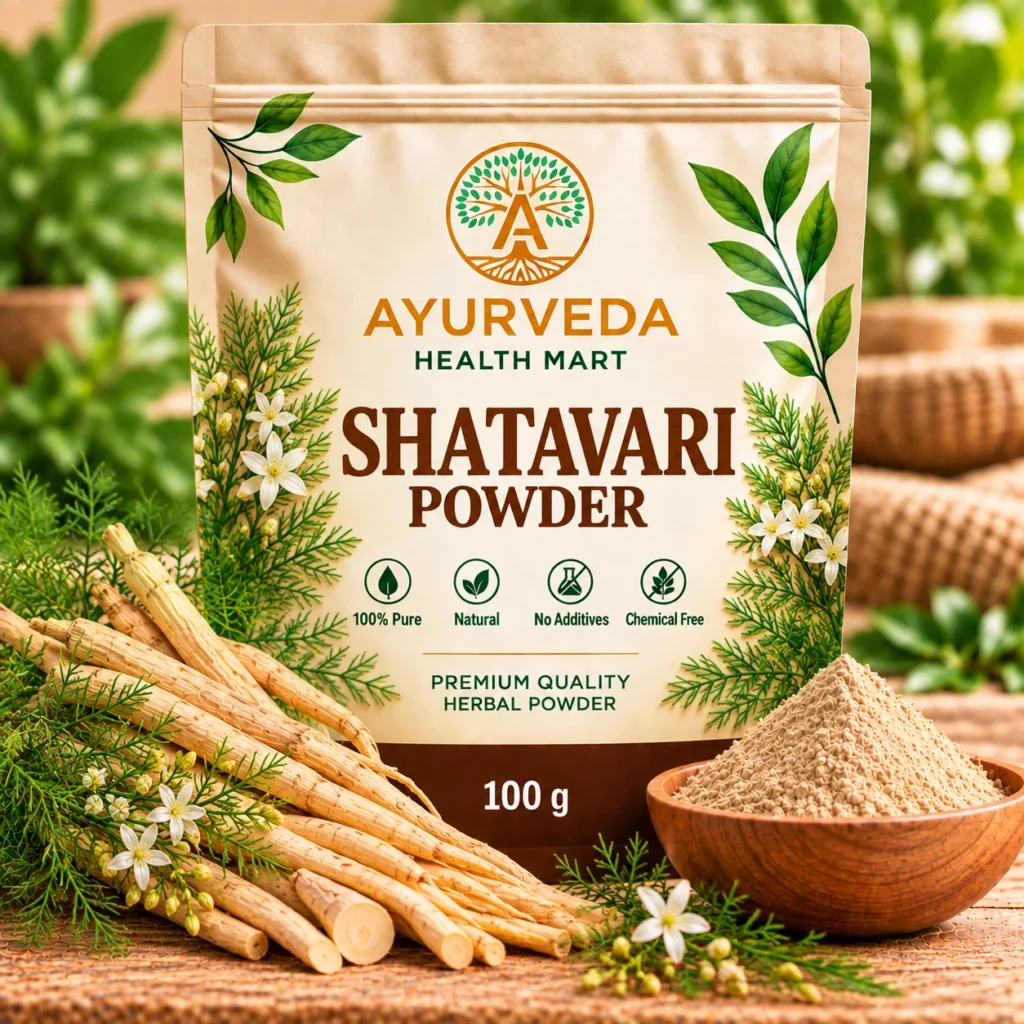
Ayurveda Health Mart Shatavari Powder – 100 g
A straightforward whole-herb powder option for customers who prefer a traditional-format Shatavari product. Check the product directions before use.
Women’s Daily Wellness Bundle – Shatavari + Amla + Moringa
A convenient bundle for customers building a broader plant-based wellness routine. Each ingredient should still be considered individually for suitability, medicines and personal health circumstances.
How to Choose Shatavari
1. Check the botanical identity
Look for Asparagus racemosus on the label rather than relying only on the common name.
2. Know whether you are buying powder or extract
Do not compare milligrams directly across powders and concentrated extracts. If an extract is standardized, the label should explain the relevant specification.
3. Prefer clear labelling and sensible claims
A trustworthy product should state its ingredients, serving directions and relevant warnings. Be cautious with products promising to cure PCOS, infertility, menopause or other medical conditions. Shatavari should not replace diagnosis or prescribed treatment.
4. Consider your complete supplement routine
Using several herbal products at once makes it harder to identify which ingredient is helping—or causing an unwanted effect. Introducing products thoughtfully can make a routine easier to assess.
Can Shatavari “Balance Hormones”?
“Hormone balance” is a popular wellness phrase, but it is not a precise medical diagnosis. Some trials of standardized Shatavari preparations have measured hormone-related outcomes alongside symptoms, but the findings should not be interpreted as proof that ordinary Shatavari powder corrects a hormonal disorder.
If you have irregular periods, persistent hot flashes, fertility concerns, abnormal bleeding, suspected PCOS or other ongoing symptoms, seek medical assessment. These symptoms can have multiple causes and deserve appropriate evaluation.
Safety: Who Should Be Cautious?
Human trials of particular Shatavari extracts have generally reported reasonable short-term tolerability, but evidence on long-term use and every commercial preparation is more limited. Stop use and seek advice if you experience an allergic reaction or persistent unwanted symptoms.
Ask a healthcare professional before using Shatavari if you are pregnant or breastfeeding, have a diagnosed medical condition, are preparing for surgery, or take prescription medicines. This is especially important when symptoms involve menstrual changes, fertility, menopause or lactation.
How Does Shatavari Fit into an Ayurvedic Lifestyle?
Ayurveda traditionally places herbs within a wider routine rather than treating them as isolated quick fixes. Consistent sleep, adequate nutrition, movement, stress management and an appropriate daily routine remain important foundations. For practical lifestyle ideas, see our beginner’s Ayurvedic morning routine.
Frequently Asked Questions
Is Shatavari only for women?
No. Although it is strongly associated with women’s wellness in traditional use and modern marketing, the plant itself is not biologically restricted to women. The suitability of any supplement depends on the individual and intended use.
Is Shatavari powder the same as Shatavari extract?
No. Powder is typically milled whole root, whereas an extract is processed and may be concentrated or standardized. Clinical results from one extract cannot automatically be transferred to ordinary powder.
Can I take Shatavari every day?
Follow the directions for the specific product. There is no single universal dose or duration appropriate for everyone. If you plan prolonged use or take medicines, discuss it with a qualified healthcare professional.
Does Shatavari treat menopause or PCOS?
Shatavari has emerging human research in women’s health, including studies of standardized extracts, but it should not be presented as a proven replacement for medical care or prescribed treatment for menopause, PCOS or other conditions.
Evidence & References
For readers who want to examine the clinical evidence directly:
- PubMed: randomized placebo-controlled Shatavari study in perimenopause (2025)
- PubMed: randomized controlled trial of Shatavari root extract for menopausal symptoms (2024)
- PubMed: randomized placebo-controlled Shatavari study in postpartum lactation (2025)
Medical note: This article is educational and does not diagnose, treat or prevent disease. Herbal products can affect people differently and may not be appropriate with some conditions or medicines.