
Isabgol vs Triphala for constipation: they may appear together in searches for natural digestive support, but they are fundamentally different. Isabgol (psyllium husk) is a soluble, gel-forming fiber used as a bulk-forming laxative. Triphala is a traditional three-fruit Ayurvedic botanical blend. They are not interchangeable, and the strength of clinical evidence for constipation is not the same.
This guide compares how they work, what research actually supports, how to read product labels, when not to self-treat, and which questions to ask before choosing a supplement. The goal is to help you make a safer, more informed decision—not to promise a cure or replace individual medical advice.
What are Isabgol and Triphala?
Isabgol: a specific fiber ingredient
Isabgol is a common name for psyllium, typically the husk from seeds of Plantago ovata. Its soluble fiber absorbs water, forms a gel and adds bulk to stool. In appropriate circumstances this can help stool pass more comfortably. It is available as loose husk, powder, granules and capsules. A capsule does not necessarily deliver as much fiber as a measured serving of husk, so comparing labels matters more than counting capsules.
Unlike a traditional multi-herb blend, psyllium has a relatively well-defined physical mechanism. That does not mean it is suitable for everyone: inadequate water, swallowing difficulties and certain gastrointestinal conditions can make it unsafe. Our dedicated psyllium fiber for constipation guide explains its preparation and precautions in more detail.
Triphala: a traditional three-fruit preparation
Triphala usually combines three dried fruits: amla (Phyllanthus emblica), haritaki (Terminalia chebula) and bibhitaki (Terminalia bellirica). It is used in Ayurvedic traditions for digestive and general wellness routines. Commercial products vary in ingredient ratios, processing, extract concentration and quality controls. A tea, loose powder and capsule may provide different amounts of botanical material.
Traditional accounts sometimes describe Triphala as supporting bowel regularity. Such descriptions should not be mistaken for the same level of evidence available for standard constipation treatments. Learn more in our Triphala digestion overview and Triphala powder versus capsules comparison.
Isabgol vs Triphala: quick comparison
| Question | Isabgol / Psyllium | Triphala |
|---|---|---|
| What is it? | Plant-derived bulk-forming soluble fiber | Three-fruit Ayurvedic botanical formula |
| Main rationale | Holds water and bulks stool | Traditional digestive use; mechanism varies by formulation |
| Evidence for constipation | Supported as a fiber option in adult clinical guidelines | Limited high-quality human evidence |
| Common forms | Husk, powder, capsules | Powder, capsules, extracts |
| Important caution | Adequate fluid; choking/obstruction and medication-timing concerns | Uncertain dose, potential adverse effects, interactions and quality variation |
Interpretation: A product being called “natural” tells you little about whether it is effective, how much to take, or whether it is safe with your medications. The appropriate choice depends on the reason for constipation and your health history.
What does the evidence actually say?
Why psyllium is discussed in clinical guidance
The 2023 joint American Gastroenterological Association and American College of Gastroenterology guideline suggests fiber supplementation for adults with chronic idiopathic constipation. This is a conditional recommendation, not a guarantee of relief. Psyllium is among the best-studied fiber supplements for this purpose. The guideline also recommends other treatments, including polyethylene glycol, in appropriate circumstances; a clinician may advise these when dietary changes and fiber are insufficient.
The guideline concerns adults with a specific clinical diagnosis, not every cause of constipation. A person with new symptoms, medication-related constipation, pelvic-floor dysfunction or possible obstruction may need a different approach. Read the AGA–ACG guideline summary rather than treating a supplement as a universal answer.
Why Triphala needs more cautious claims
Triphala has a long traditional history and has been investigated in laboratory, animal and some human research. However, study methods, formulations and outcomes vary, and the available evidence is not strong enough to establish Triphala as a proven substitute for guideline-supported constipation care. Results reported for one extract cannot be assumed to apply to a different retail powder or capsule.
The National Center for Complementary and Integrative Health notes that scientific evidence for many Ayurvedic approaches remains limited and that quality and contamination are important considerations. A responsible product page should describe traditional use accurately without presenting it as established treatment for disease.
Why “works faster” is not the best comparison
People often compare products by how quickly they expect a bowel movement. Yet stool frequency is only one outcome: comfort, straining, bloating, pain, medication interactions and sustainability also matter. Constipation can have several causes, and there is no reliable head-to-head evidence showing that one standard Triphala formulation consistently works faster than psyllium. Avoid choosing solely from dramatic online testimonials.
Which option may fit your needs?
If your diet is low in fiber
First consider food-based fiber and fluids. If you are an adult with uncomplicated constipation and a healthcare professional considers supplementation appropriate, psyllium is a more evidence-supported starting point than Triphala. Check the actual grams of fiber per serving. A label showing a large capsule count does not necessarily mean the serving provides a substantial amount of fiber.
If you are exploring traditional Ayurvedic practices
You may be interested in Triphala for cultural or wellness reasons. Treat it as an optional botanical supplement with uncertain constipation benefit, not as a replacement for evaluation or proven care. Review all ingredients, avoid stacking multiple bowel-active products, and ask a clinician or pharmacist about interactions before trying it—especially if you have ongoing symptoms.
If constipation keeps returning
Recurrent constipation is a reason to look beyond the supplement shelf. Consider diet, fluid intake, physical activity, new medications, iron supplements, thyroid problems, and changes in routine. Keep a short record of stool frequency, consistency, straining, pain and associated symptoms to discuss with a clinician. See the NIDDK symptoms and causes guide for a practical overview.
If you have IBS, a chronic condition or multiple prescriptions
Do not assume either product is automatically suitable. Some people with sensitive digestive systems experience more gas or discomfort when increasing fiber quickly. Others need evaluation for a bowel disorder or medication effect. A personalized plan may be safer than experimenting with combinations of laxatives and botanicals.
How to use digestive products more safely
Psyllium: the fluid requirement is essential
Follow the directions on the specific product label or instructions from your clinician. For standard psyllium products, MedlinePlus advises at least 8 ounces (about 240 mL) of liquid with a dose. Powder or granules should be mixed with liquid immediately before use. Never swallow dry psyllium powder. Capsules also require sufficient fluid. Seek guidance first if you have difficulty swallowing or a history of intestinal blockage.
Some medications need to be separated from psyllium; MedlinePlus specifically advises a three-hour separation for certain medicines, including digoxin, salicylates and nitrofurantoin. Do not apply a universal timing rule to every drug. Give your pharmacist your full medication list and ask for the appropriate schedule.
Triphala: do not invent a universal dose
There is no well-established clinically proven constipation dose that applies across all Triphala powders and capsules. Concentrations and compositions differ. If a qualified healthcare professional considers it appropriate, use only a clearly labeled product and follow their advice and the manufacturer’s directions. Stop if you develop diarrhea, cramping, a rash or other concerning symptoms. Do not increase the amount to force a bowel movement.
Do not automatically combine them
Taking two products together does not necessarily produce better or safer results. It can make side effects harder to identify and may complicate medication timing. For persistent symptoms, consult a clinician rather than layering products. People who are pregnant or breastfeeding, children, older adults with frailty, and those with chronic digestive disease should seek individualized advice before using supplements for constipation.
Build a constipation-friendly routine before buying more supplements
For many people, everyday habits deserve attention alongside any product decision. The NIDDK constipation treatment guidance recommends more fiber-rich foods, enough liquids, regular physical activity and a consistent bathroom routine. Adults generally need roughly 22–34 grams of dietary fiber daily depending on age and sex; needs vary, and increases are often easier to tolerate gradually.
- Look at your current meals. Include vegetables, fruit, beans, lentils and whole grains as tolerated. Increase gradually if you currently eat very little fiber.
- Pay attention to fluids. Hydration is especially important when using bulk-forming fiber; people with fluid restrictions should follow medical guidance.
- Move regularly. Walking and other comfortable physical activity may support normal bowel function.
- Make time after breakfast. A regular, unhurried toilet opportunity can help you respond to natural bowel signals. Avoid straining.
- Review new medicines. Iron, some antacids and several prescription medicines can contribute to constipation. Do not stop prescribed treatment without advice.
- Notice what changes. If symptoms persist despite sensible self-care, seek a medical assessment rather than indefinitely adding supplements.
For readers who want broader botanical context, our guide to Ayurvedic herbs for digestion explains traditional uses while distinguishing them from established medical treatment.
Side effects, interactions and when to seek help
Psyllium: bloating or gas may occur, especially when fiber intake rises quickly. Inadequate liquid can cause serious swallowing or obstruction problems. Allergic reactions are possible, particularly with powder exposure. Check with a clinician before use if you have difficulty swallowing, unexplained abdominal pain, bowel narrowing or suspected obstruction.
Triphala: gastrointestinal upset or diarrhea may occur. Potential herb–drug interactions and differences in product quality deserve attention. Some Ayurvedic preparations have been found to contain toxic metals; this does not mean every Triphala product is contaminated, but it is a reason to seek transparent testing and avoid unverified sellers. See FDA guidance on heavy-metal risks in some Ayurvedic products.
Persistent constipation, a sudden unexplained change in bowel habits or a family history of colorectal cancer also warrants medical review. The right treatment depends on the underlying cause.
How to compare product quality and labels
Start with the ingredient identity. Psyllium should identify the fiber ingredient and quantity per serving. Triphala should list its component fruits and, ideally, plant parts and amounts. Next, check the serving size, recommended use, warnings, allergen information, batch/lot number, expiry date and manufacturer details.
For botanical supplements, ask whether a supplier can provide meaningful quality information, such as testing for identity and contaminants. A glossy product photograph, “premium” badge or vague “detox” claim is not a substitute for reliable documentation. For a broader checklist, see How to Choose an Ayurvedic Supplement Online.
Compare the cost per meaningful serving, not only bottle size. With psyllium, the fiber quantity matters; with Triphala, ingredient transparency and responsible claims matter. Do not assume that a higher price, darker powder or larger capsule automatically indicates better quality.
Explore the ingredients mentioned
These catalogue options are shown to help compare formats and labels, not as a recommendation to treat unexplained or persistent constipation without medical advice.
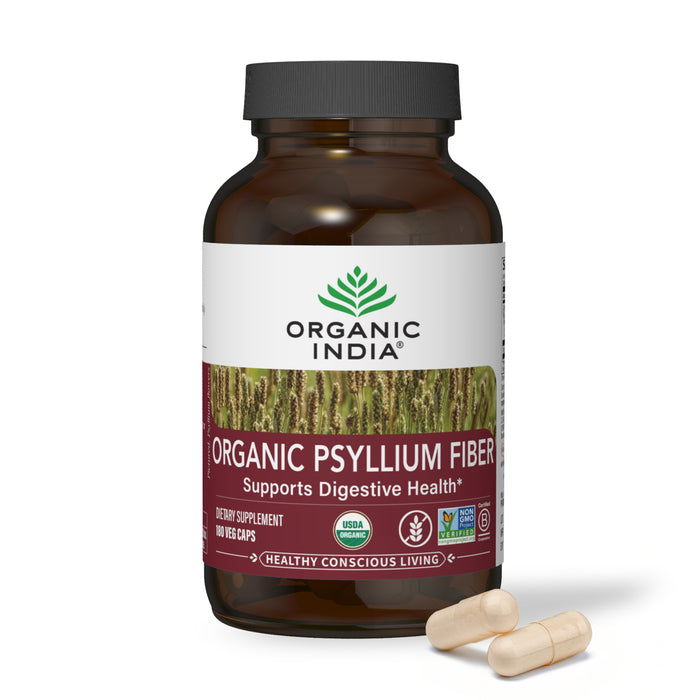
Organic India Psyllium Fiber — 180 Veg Capsules
Compare serving size, grams of fiber and hydration instructions on the product label.
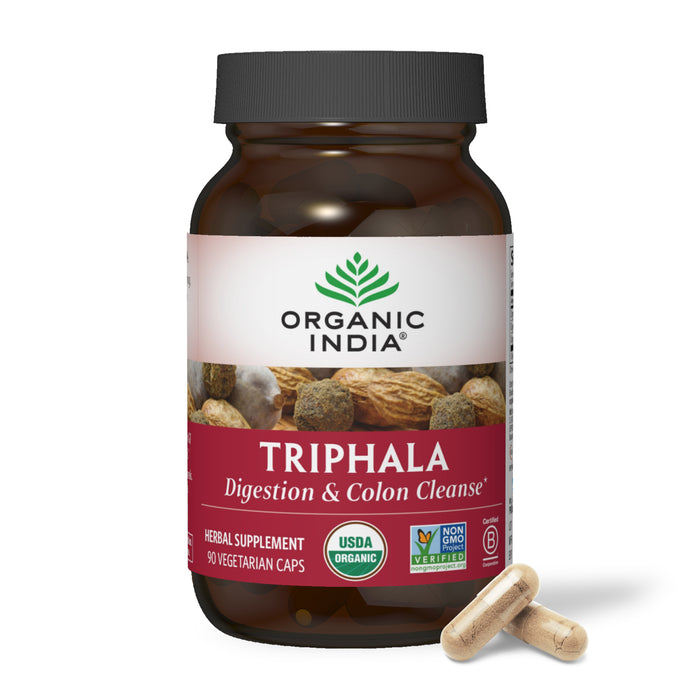
Organic India Triphala — 90 Veg Capsules
Review the three-fruit composition and directions. Traditional use does not establish a clinically proven constipation benefit.
Prefer to compare powder formats? See Ayurveda Health Mart Triphala Powder.
Common misconceptions about natural constipation support
“Natural means side-effect free”
Incorrect. Fiber can cause gas and, if taken improperly, serious swallowing problems. Botanical blends can cause adverse effects or interact with medicines. Natural origin is not a safety guarantee.
“Triphala is just another name for fiber”
No. Psyllium is a specific gel-forming fiber, whereas Triphala is a multi-fruit botanical formula. Their ingredient profiles and evidence bases differ.
“If a little helps, a lot will work faster”
Increasing doses without guidance can increase discomfort or risk. Follow product instructions and seek help if a reasonable approach does not work.
“A daily bowel movement is required for everyone”
Normal frequency varies. More important signs include persistent hard stools, straining, pain, a sense of incomplete emptying and a change from your usual pattern.
Frequently asked questions
Is Isabgol better than Triphala for constipation?
For adults with uncomplicated chronic constipation, psyllium has clearer support as a fiber option in clinical guidance. Triphala’s traditional use is not equivalent to proven efficacy. Individual suitability depends on the cause and medical history.
Can I take Isabgol and Triphala together?
Do not combine them automatically. There is insufficient evidence that the combination improves outcomes, and side effects or medication interactions may be harder to identify. Ask a healthcare professional first.
How much water should I drink with psyllium?
MedlinePlus advises at least 8 ounces (approximately 240 mL) of liquid with a psyllium dose. Follow your product’s instructions and clinician’s advice, especially if you have a fluid restriction.
Is Triphala proven to treat chronic constipation?
High-quality human evidence is insufficient to establish Triphala as a reliable replacement for guideline-supported care. Formulations vary and there is no universal proven dose.
Does psyllium work the same in capsules and powder?
Both can provide psyllium, but the amount of fiber per serving and instructions can differ. Compare labels and take either form with sufficient fluid.
Can I use these during pregnancy?
Constipation in pregnancy is common, but choices should be reviewed with a prenatal healthcare professional. Avoid starting Triphala or any herbal laxative without individualized advice; ask about appropriate diet, fluids and fiber options.
When should I stop self-treatment?
Seek medical advice for persistent symptoms or a new unexplained bowel change. Seek prompt care for bleeding, severe or constant abdominal pain, vomiting, inability to pass gas or unexplained weight loss.
Should I choose based on online reviews?
Reviews can describe experiences but cannot establish efficacy or safety. Prioritize verified ingredient information, credible medical guidance and your own health circumstances.
Bottom line
Isabgol and Triphala serve different roles. Psyllium is a studied bulk-forming fiber that may be useful for some adults with constipation when taken correctly. Triphala is a traditional botanical blend with more limited clinical evidence. Start with the reason for your symptoms, your usual diet and any medications rather than choosing by marketing claims. If constipation is persistent, painful or accompanied by warning signs, seek medical care.
Editorial disclosure: Educational content only. Product mentions are contextual and do not imply medical endorsement. This article has not been represented as reviewed by a clinician.