
Himalaya Neem tablets are frequently considered by shoppers interested in traditional Ayurvedic herbs. Before choosing an oral neem supplement, it helps to understand what it contains, what current evidence can and cannot establish, and when extra caution is needed.
Overview
Himalaya Neem tablets are an oral herbal supplement associated with the plant Azadirachta indica. An oral botanical supplement is different from topical neem skincare, traditional leaf preparations, and neem oil. These products are not interchangeable. Always identify the exact product, plant part, and formulation before comparing health claims. A brand name or ingredient tradition does not establish effectiveness for a particular disease.
Traditional uses and modern evidence
Neem has a long history of traditional use. Researchers have investigated various neem preparations in laboratory and animal experiments; this does not prove oral tablets treat acne, bacterial infections, diabetes, or other illnesses. Human studies are too limited and heterogeneous to assign a reliable health benefit to every neem formulation. Avoid claims such as guaranteed skin clearing, blood purification, or detoxification. The relevant question is whether controlled human studies have tested the exact preparation and meaningful outcomes.
How to read the label
Check the botanical name; plant part; powder versus extract; quantity per tablet; manufacturer’s suggested serving; other ingredients; expiry date; batch details; and contraindication warnings. Extract ratios alone can be misleading: 500 mg of powdered herb is not automatically comparable with 500 mg of a concentrated extract. A large milligram figure should not be treated as evidence of quality or efficacy. Check the actual packaging because formulations and directions can differ across markets or change over time.
Understanding dosage
There is no well-established universal oral neem dose that can be safely recommended for every product or person. Do not calculate tablet doses from studies using a different neem extract, from topical products, or from discussions of neem oil. Review the pack directions and consult a clinician or pharmacist if you are considering oral use. Never assume that doubling a botanical serving makes it work faster or better.
Who should be especially cautious
Do not self-start oral neem during pregnancy, while trying to conceive, or while breastfeeding: there are important safety uncertainties and reproductive concerns in preclinical research. Children, people with significant liver or kidney disease, those preparing for surgery, and people managing complex conditions should seek qualified advice rather than experimenting. Oral neem oil ingestion has caused serious poisoning and should never be substituted for labeled tablets. Seek urgent medical care after accidental oil ingestion or symptoms such as repeated vomiting, confusion, or seizures.
Prescription medicines and interactions
Interaction evidence for oral neem supplements remains incomplete, which is not the same as proof of safety. Laboratory or animal studies suggest possible effects on glucose regulation; people taking insulin or other glucose-lowering medicines should not add neem on the assumption it is harmless. Show your clinician the complete supplement label and your prescription and nonprescription medicine list. Professional review matters particularly if you take several drugs or have surgery planned.
What about acne and skin health?
People commonly search for neem after noticing acne, oily skin or recurrent breakouts. But evidence on topical preparations cannot simply be transferred to an oral supplement. Persistent, painful, widespread or scarring acne warrants evidence-based care. Skin symptoms can have several causes, and a tablet marketed as botanical wellness support is not a substitute for diagnosis. Our existing guide to neem powder versus capsules explores the differences between forms rather than claiming one cures skin problems.
Quality and authenticity checks
Prefer an intact seal, legible ingredient list, batch code, expiry date, identifiable manufacturer, and transparent customer support. Look for quality testing applicable to the actual product and batch, where available. Words such as pure, herbal, natural and premium are not independent proof of identity, purity, contamination control or clinical benefit. Storage instructions also matter; do not use products that are expired or show signs of moisture or damage.
A decision framework before buying
First define the purpose of your purchase: general interest in traditional herbs is different from attempting to treat a diagnosed illness. Second, confirm that an oral supplement is even appropriate for that purpose. Third, check the exact ingredients and label. Fourth, identify pregnancy, medical conditions, medications and possible allergies. Fifth, ask a clinician about risks and alternatives where needed. Finally, reconsider if the product marketing relies on dramatic testimonials or disease-cure language rather than reliable data.
Common myths
Myth: neem oil and neem tablets are equivalent. Reality: their routes and risks differ dramatically. Myth: natural ingredients cannot cause adverse effects. Reality: herbs can have biological effects and toxicities. Myth: a more concentrated extract must be better. Reality: effective and safe dosing requires evidence specific to that extract. Myth: a botanical used traditionally is proven to treat modern diagnoses. Reality: tradition and clinical trials answer different questions.
Building a practical routine
When trying to support skin and general wellbeing, pay attention to basics such as balanced meals, sleep, sun protection and appropriate skincare instead of relying on a supplement to correct an unspecified problem. Document new symptoms or adverse reactions. Stop using any supplement that appears to cause an unexpected reaction and seek qualified assessment for concerning symptoms. If a product is intended for a specific condition, ask what established treatment options exist first.
For more comparisons, read Neem Powder vs Capsules and How to Choose an Ayurvedic Supplement Online. Browse the Himalaya Herbal Products collection for other formats.
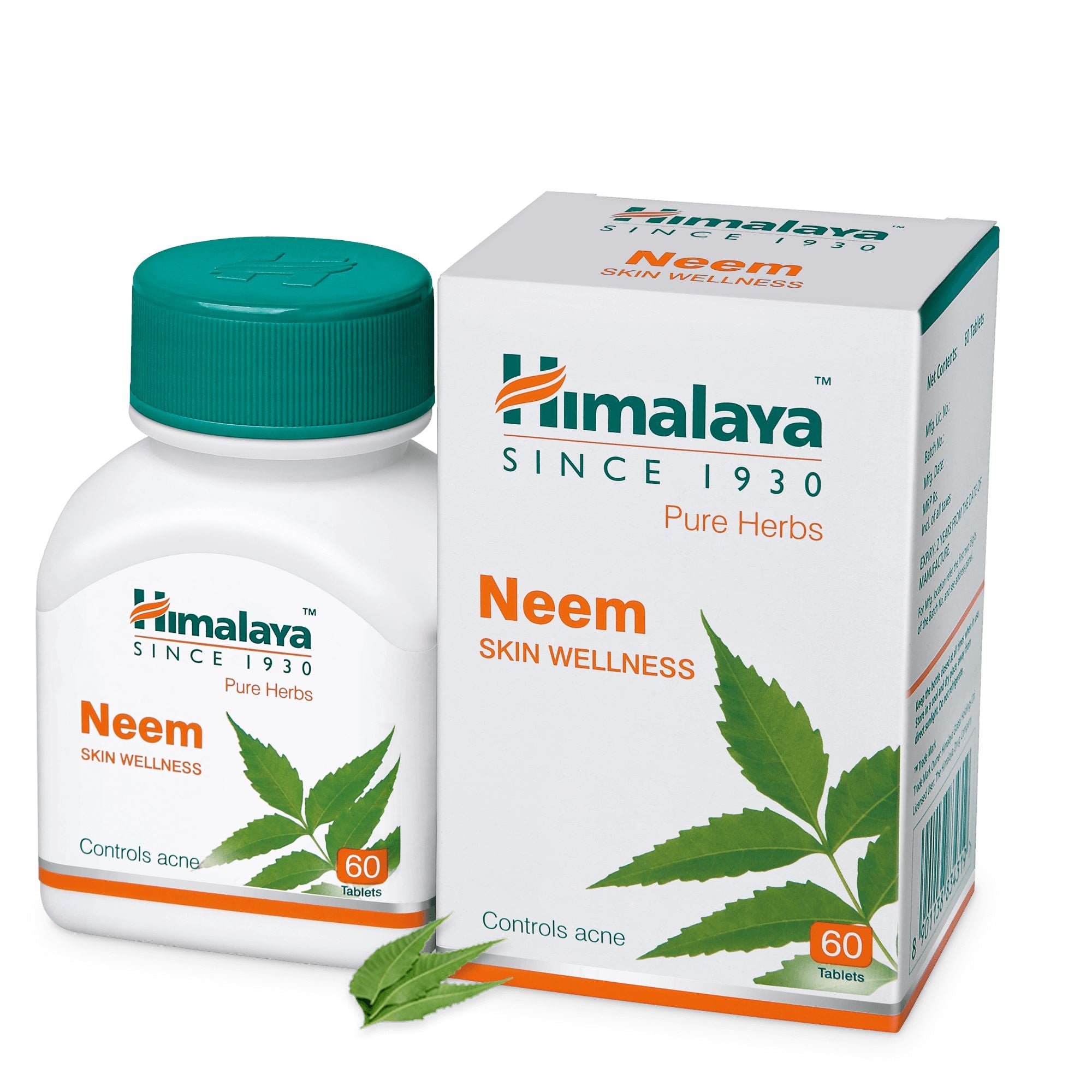
Product spotlight
Himalaya Neem — 60 Tablets
Explore the ingredient and label information for this actual product. Showing the product does not imply that it treats any medical condition.
Three practical situations to think through
Situation 1: You are browsing neem because of recurring breakouts
Start by identifying the type and severity of your skin complaint rather than assuming that a particular herb is needed. Acne can be influenced by oil production, inflammation, hormones, products and medication effects. Look for treatments supported by dermatology guidelines; if lesions are painful, leave marks or cause distress, a clinician can help select suitable care. The presence of neem in an oral supplement does not demonstrate that it reaches the skin at a therapeutic concentration.
Situation 2: You already take medicine for blood sugar
A person using insulin or other glucose-lowering drugs needs to know whether any additional botanical product may alter monitoring or treatment. Do not rely on online dose conversions or change prescription doses yourself. Record the exact supplement, manufacturer and label details and ask the prescribing professional before combining therapies. A pharmacist can also identify other supplements on your list that deserve attention.
Situation 3: You want to try an herb because a friend uses it
Different people have different diagnoses, medicines, allergies and reproductive circumstances. A friend’s experience is not an appropriate way to determine your safety or dose. Compare the actual preparations and decide whether the anticipated benefit is documented strongly enough to justify the potential risks and cost. Doing nothing until reliable evidence or professional guidance is available is a valid choice.
Questions worth asking the seller or pharmacist
- What exact species, plant part and ingredients are in the tablet?
- Is the label a powdered-herb quantity or an extract amount, and how is it standardized?
- Are batch identity, purity and contaminant-testing details available?
- What is the manufacturer’s current recommended use and warning information for my country?
- Are there any known reasons to avoid the product given my medicines or medical history?
- What should I do if I experience an unexpected symptom after taking it?
Clear answers are more meaningful than vague promises of rapid ‘cleansing’ or universal suitability. When in doubt, defer purchase until the product information can be verified.
Further evidence and safety resources
NCCIH: Using Dietary Supplements Wisely and FDA: Information for Consumers on Using Dietary Supplements explain broader supplement risks, labeling and medical discussions. Review MedlinePlus medicine information when discussing possible interactions with your pharmacist.
Frequently asked questions
Are Himalaya Neem tablets proven acne treatment?
No; there is insufficient product-specific human evidence to establish oral neem tablets as an effective acne treatment.
Can neem tablets replace diabetes medicine?
No. Do not replace prescribed glucose-lowering treatment with neem. Discuss supplement risks with the treating clinician.
Are neem powder and capsules interchangeable?
No. Plant part, formulation and serving size vary, so doses should not be transferred between preparations.
Can I take neem tablets during pregnancy?
Avoid self-starting during pregnancy or while trying to conceive because safety is uncertain and reproductive risks have been raised.
Is neem oil safe to swallow?
No. Ingesting neem oil can cause serious poisoning and it must not be substituted for oral tablets.
How can I check a product is authentic?
Look for intact seals, manufacturer information, ingredient listing, batch identification and expiry date; buy from a traceable seller.
Educational information only; this article is not a substitute for medical evaluation or treatment.