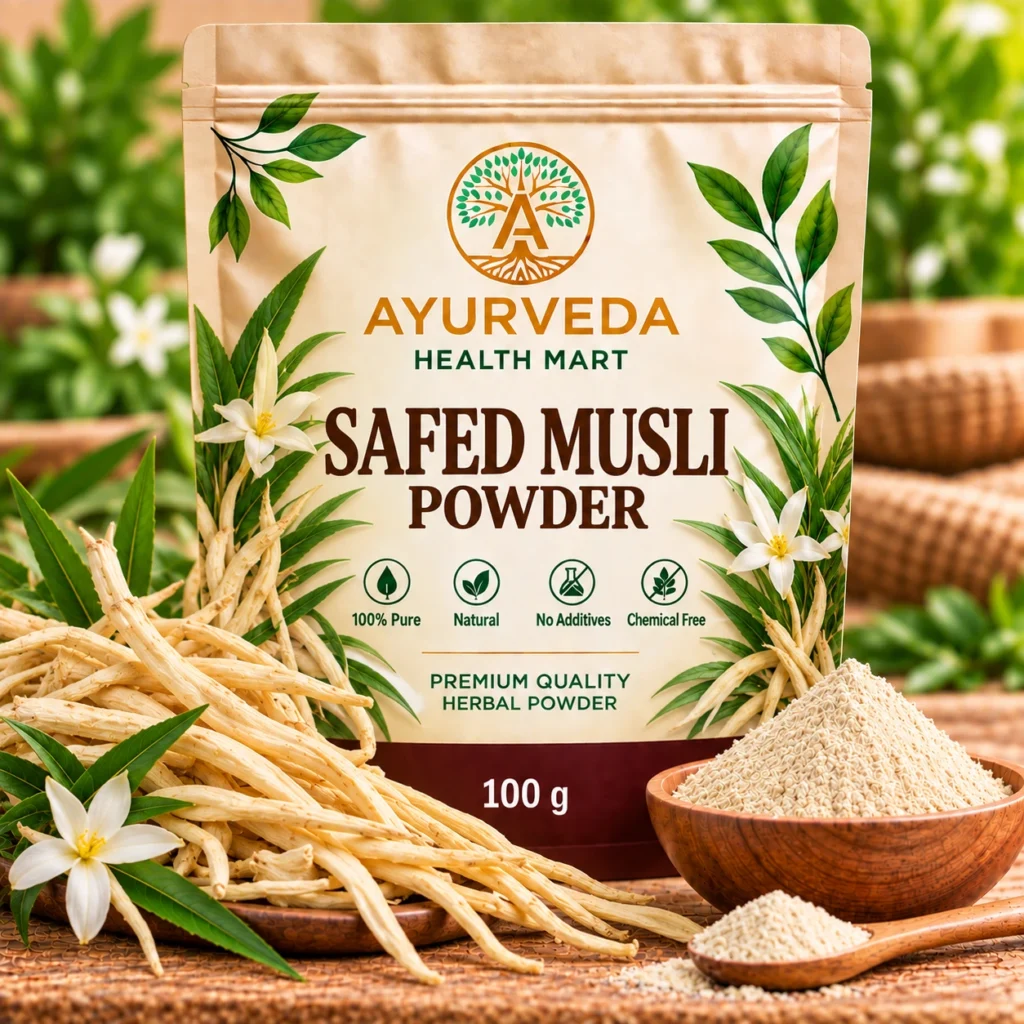
Safed Musli is a traditional Ayurvedic botanical, commonly associated with Chlorophytum borivilianum. Root-derived powders and extracts are marketed for general vitality, but traditional descriptions should not be mistaken for proof of a specific health benefit in humans. This guide explains identification, product quality, realistic expectations and precautions.
Contents
- Botanical identity
- Traditional uses
- What research can tell us
- Powder versus extracts
- Quality checklist
- Safety considerations
- FAQs
What is Safed Musli?
Safed Musli is a common name applied to roots of certain Chlorophytum plants, especially C. borivilianum. The roots or tubers are harvested and processed into dried botanical material. Common names alone do not establish species, purity or suitability. A trustworthy product label should identify the botanical species and plant part, along with the amount included in each serving.
Traditional Ayurvedic context
Safed Musli appears in traditional wellness discussions relating to nourishment and vitality. These uses are part of a medical tradition with its own historical framework. A traditional association with stamina, strength or reproductive health does not automatically mean the plant has been shown to improve these outcomes in rigorous modern trials. The distinction is especially important when marketing makes claims about hormones or sexual function.
What do modern studies show?
Laboratory and animal research may examine constituents such as saponins and other plant compounds. Findings from cells or animals cannot demonstrate clinical efficacy in people. Human research has generally been limited, and the quality, dose, species and formulation can differ substantially across studies. It would therefore be misleading to promise testosterone increases, fertility improvements, treatment for sexual dysfunction or athletic performance outcomes based solely on traditional use or preliminary findings.
For health decisions, consider the overall strength of evidence, independent replication, comparisons against placebo and whether meaningful patient outcomes were measured. People with persistent fatigue or sexual-health symptoms should seek an appropriate medical evaluation instead of treating the supplement as a substitute for diagnosis.
Safed Musli powder versus extract
| Form | What it means | What to check |
|---|---|---|
| Whole-root powder | Dried root ground into powder | Species, plant part, batch and contaminants |
| Concentrated extract | Extracted preparation that may concentrate selected compounds | Extraction ratio and standardization method |
| Multi-herb blend | Safed Musli combined with other ingredients | Full ingredient quantities and interactions |
Claims about an extract cannot automatically be applied to a conventional root powder. Two supplements listing the same herb can differ markedly in purity, dose and processing, so the label matters more than dramatic benefit claims.
How to choose a responsibly labeled product
Start with the full botanical name, plant part, manufacturer identity, batch number, manufacturing date, expiry or best-before date, storage instructions and an understandable ingredient list. If possible, request credible contaminant screening for heavy metals and microbial contamination. A certificate of analysis should match the batch supplied; a generic certificate or a vague “lab tested” badge is weaker evidence.
Packaging should protect powder from moisture. Check for unusual odors, evidence of dampness and damaged seals. Botanical identity testing can be valuable when similarly named plant materials circulate in commerce. Because botanical supplies vary, do not infer authenticity from color or texture alone.
Choosing between products and routines
Before adding any herb, ask what practical goal it serves, what evidence supports that goal and whether a lifestyle change or clinical evaluation is more relevant. A product with many ingredients can make side effects harder to attribute. No supplement replaces adequate food, sleep, exercise or appropriate medical treatment. For more on quality considerations, see our Ayurvedic supplement quality and authenticity guide.
Safety, interactions and who should seek advice
Reliable safety data for Safed Musli during pregnancy, breastfeeding and childhood are limited. Avoid assuming safety from traditional use. People taking prescription medication, those with liver or kidney disease, and anyone with an allergy history should discuss supplements with a qualified clinician. Stop use and seek medical advice if unexplained symptoms occur. Do not abandon effective treatment for infertility, diabetes or any chronic condition in favor of herbal products.
How to read a supplement label
Check the ingredient list to establish whether the container contains only Safed Musli or a blend. Compare the serving size and total quantity rather than looking only at the amount printed prominently on the front. A manufacturer may list a percentage of extract while another lists milligrams of raw root powder; these figures are not necessarily comparable. Check for added sugars, flavorings or substances you need to avoid due to allergies.
Why harvesting and storage matter
Botanical preparations begin as agricultural materials, so growing conditions, harvesting, drying and storage may affect their quality. Powders can absorb moisture if packaging is opened and left in a humid environment. Follow the manufacturer’s storage directions, close packets carefully and use clean, dry utensils. Never consume material with visible mold or unusual deterioration. Products sold without traceable batch information are harder to investigate if a quality concern arises.
What research would strengthen the evidence?
Well-designed clinical trials would need to specify the exact species, plant part and preparation; establish measurable outcomes relevant to people; compare results with an appropriate control; and report side effects systematically. A positive result from a small or uncontrolled study should be viewed as preliminary. Until stronger human evidence exists, claims about fertility, hormones or chronic-disease treatment should be framed cautiously rather than as proven benefits.
Practical questions before buying
- Is the botanical species and plant part clearly identified?
- Is the product a whole-root powder, extract or blend?
- Can its batch and manufacturer be traced?
- Are heavy-metal and microbial screening details available?
- Are claims realistic and proportionate to the clinical evidence?
What about dosage?
There is no universally established evidence-based dose applicable to all Safed Musli preparations. Products vary in concentration, and a study using one extract cannot establish a safe and effective dose for another. Follow local labeling requirements and obtain individualized advice, particularly when combining supplements or medications.
Sources and evidence context
For general evidence appraisal and supplement quality advice, consult NCCIH guidance on using dietary supplements wisely and the NIH Office of Dietary Supplements consumer guidance. Neither source should be read as confirmation of a particular Safed Musli treatment claim.
Frequently Asked Questions
Is Safed Musli proven to raise testosterone?
Evidence is not sufficient to claim a reliable testosterone-raising effect for commercial powders.
Does powdered root equal a standardized extract?
No. Processing changes composition, making results from one formulation difficult to generalize.
Can it replace medical treatment for fatigue?
No. Persistent fatigue has many possible causes and deserves appropriate evaluation.
How can I check product authenticity?
Look for species identification, traceable manufacturing, batch information and credible quality testing.
Educational information only. Traditional use is not proof of clinical efficacy.