Rose Petal Powder for Face: How to Use It, Benefits & Skin Safety
Rose petal powder is a finely milled botanical ingredient used in traditional beauty routines. If you are considering a rose powder face mask, the practical questions are how to mix it, how often to use it, whether it suits sensitive skin, and what benefits are actually supported by research. This guide answers those questions without confusing traditional use with proven treatment.
Contents
What Is Rose Petal Powder?
Rose petal powder is made by drying and grinding petals. Its fragrance, color and texture depend on the botanical variety, drying method and processing. It is different from rose essential oil, rose water and concentrated extracts; their compositions and safety profiles should not be treated as equivalent.
Rose has a history in traditional South Asian skin-care practices, including face packs and aromatic preparations. Traditional popularity does not demonstrate that the powder treats acne, pigmentation, eczema or other diagnosed skin conditions.
Rose Petal Powder Benefits: What Can We Say?
A simple cosmetic ritual
Mixed with water, the powder forms a paste that can be used briefly as a rinse-off cosmetic mask. Some people enjoy the sensory experience, but a pleasant feel is not evidence of clinical improvement in skin health.
Antioxidants: laboratory findings versus human outcomes
Rose petals contain plant compounds studied for antioxidant activity. Laboratory measurements of antioxidant capacity do not establish that applying rose powder to the face prevents wrinkles or improves pigmentation. Product composition, skin penetration and human outcomes require separate research.
Acne, dark spots and inflammation
There is insufficient high-quality clinical evidence that homemade rose petal powder masks treat acne, melasma or inflammatory skin disease. If these are your concerns, use established skin-care measures and seek a dermatologist’s advice when symptoms persist. For another traditional cosmetic ingredient, compare our Multani Mitti safety guide.
How to Use Rose Petal Powder on Your Face
- Check that the powder is intended for cosmetic use and is stored according to its label.
- Wash your hands and use a clean bowl and spoon.
- Mix a small amount of powder with plain water to make a smooth, spreadable paste. Avoid essential oils, perfume and lemon juice.
- After a successful patch test, apply a thin layer to intact skin, avoiding the eyes, lips and irritated areas.
- Use as a short rinse-off mask according to product directions. Do not leave it on until it becomes painfully tight or uncomfortable.
- Rinse gently, pat dry and follow with a fragrance-free moisturizer.
Start with occasional use rather than a daily mask. Stop immediately if burning, itching, swelling or a rash develops. Do not scrub the dried powder against the skin.
Rose Powder vs Rose Water vs Rose Oil
Powder is a particulate botanical material commonly mixed into a paste. Rose water is a water-based preparation whose fragrance constituents depend on production. Rose essential oil is a concentrated aromatic product with greater potential for fragrance-related reactions. These are not interchangeable, and none is guaranteed suitable for sensitive skin.
Patch Testing, Contraindications and Skin Safety
Botanical does not mean non-allergenic. Fragrance components and plant-derived ingredients can trigger irritant or allergic contact dermatitis. Test a small prepared amount on an inconspicuous area following dermatologist guidance before applying it broadly. A negative home test cannot rule out all delayed reactions.
Avoid applying masks to broken skin, active eczema, infected areas, severe sunburn or immediately after aggressive exfoliation or cosmetic procedures. If you have rosacea, highly reactive skin, a known rose/fragrance allergy, or use prescription topical treatments, ask a dermatologist whether a botanical mask is appropriate. Seek urgent medical attention for breathing difficulty or rapidly developing facial swelling.
For routine skin health, gentle cleansing, moisturization and broad-spectrum sun protection have a more established role than untested DIY masks. Persistent acne, new pigmentation, severe irritation or changing lesions warrant professional assessment.
Relevant Rose Powder Product
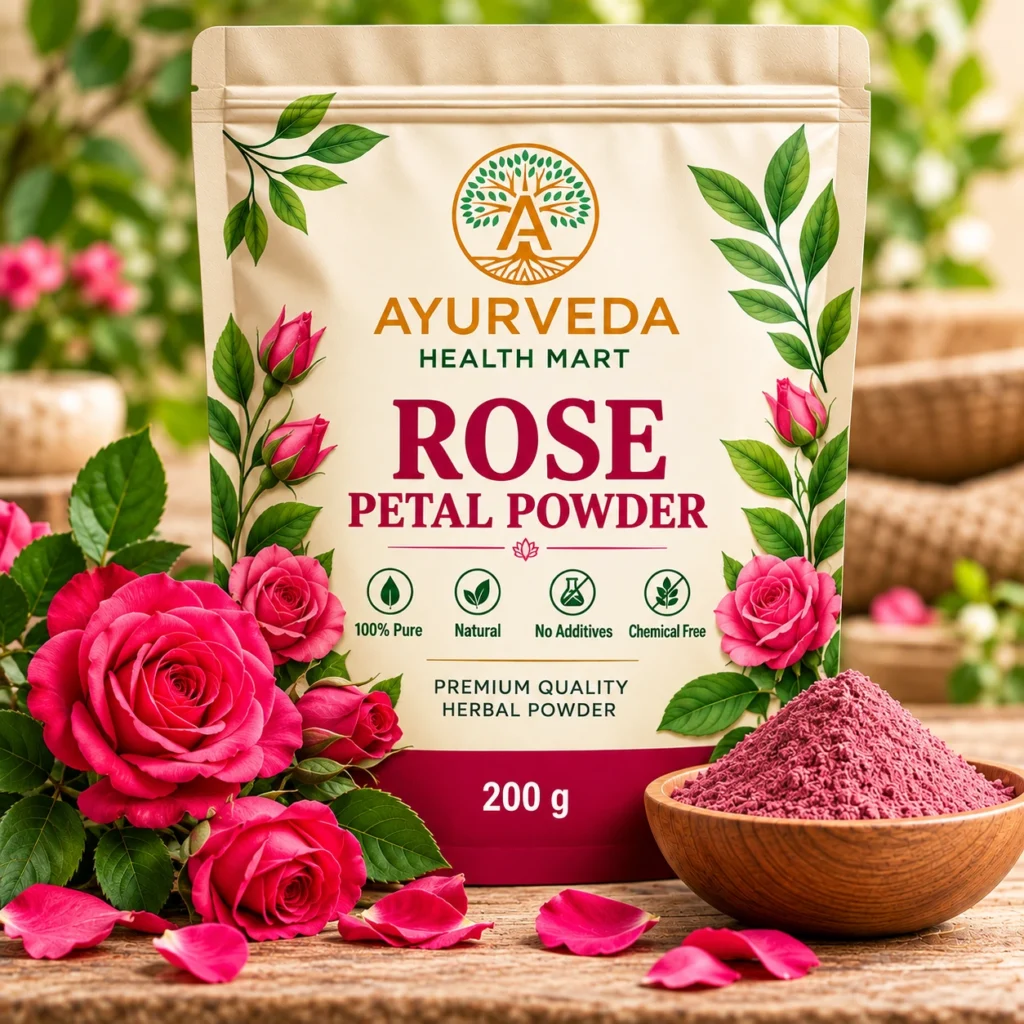
Customers looking for a loose botanical format can review Ayurveda Health Mart Rose Petal Powder – 200 g. Read the product’s current ingredient and use instructions before deciding whether it suits your skin. This is a cosmetic wellness option, not a substitute for medical treatment.
How to Choose a Rose Petal Powder
Look for a clear ingredient list, batch or lot details, manufacturer information, storage instructions and an intact package. Avoid products with vague composition, undisclosed fragrance blends or exaggerated promises such as guaranteed skin whitening. Keep powder dry, use clean utensils and discard preparations rather than storing a wet homemade mixture for extended periods.
Frequently Asked Questions
Can rose petal powder remove dark spots?
There is no reliable clinical evidence that a homemade rose petal powder mask removes dark spots. Persistent or changing pigmentation deserves proper evaluation.
Is rose petal powder good for sensitive skin?
Not necessarily. Sensitive skin can react to plant materials and fragrance constituents. Patch testing and professional advice are sensible, especially with eczema or rosacea.
Can I mix it with yogurt, honey or lemon?
Plain water is a simpler starting point. Added ingredients increase variables and may irritate skin; lemon juice in particular is best avoided in DIY facial treatments.
Can I use it every day?
Daily use is not established as necessary or beneficial. Follow the product label and reduce frequency or stop if dryness or irritation develops.
Bottom Line
Rose petal powder can be part of a simple traditional cosmetic ritual, but its medical skin benefits remain unproven. Choose a clearly labelled product, use a gentle rinse-off method and prioritize skin tolerance over promises. Explore Rose Petal Powder and visit our Ayurveda wellness blog for other evidence-aware ingredient guides.
References
- American Academy of Dermatology: How to test skin-care products.
- DermNet: Fragrance allergy.
- American Academy of Dermatology: Skin-care basics.
For educational purposes only. This article is not a diagnosis or treatment recommendation.