
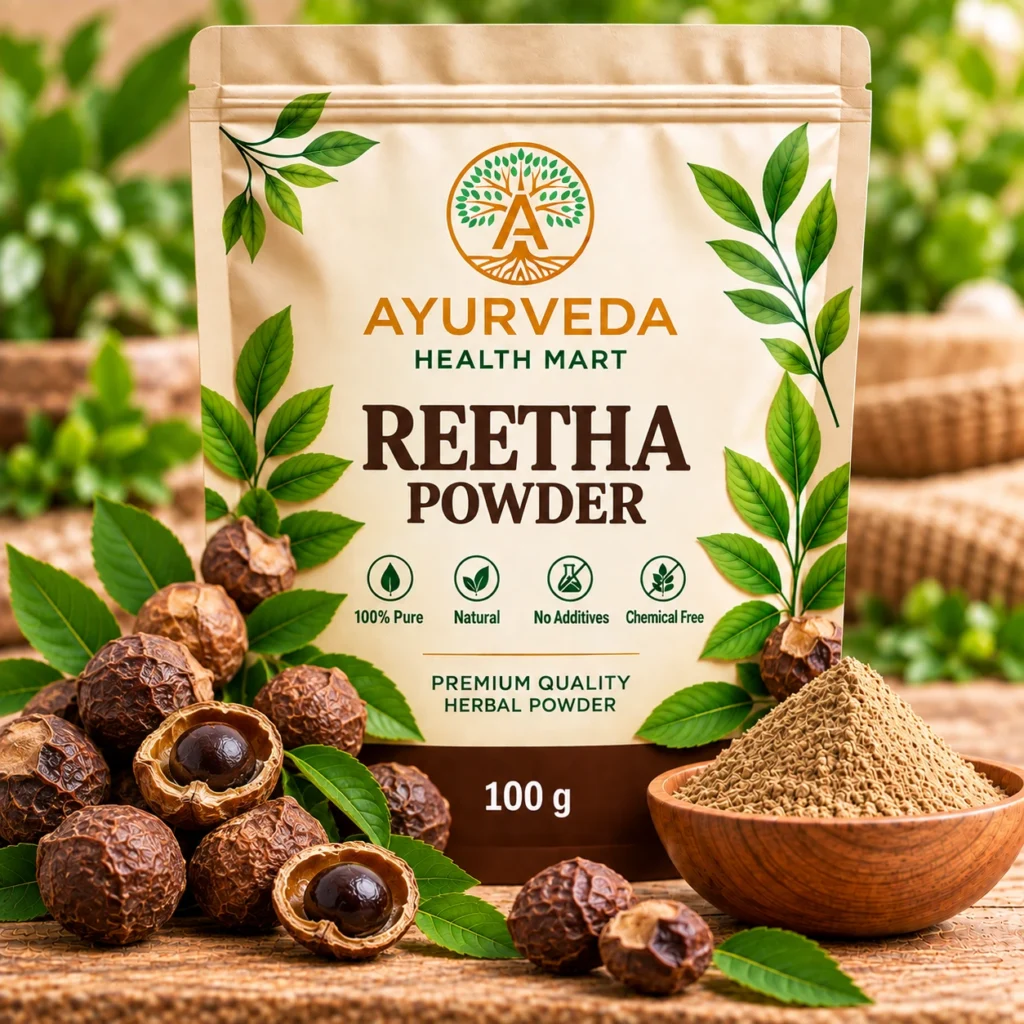
Reetha Powder for Hair: How Soapnut Cleanses & How to Use It
Reetha, also called soapnut, has a long history as a plant-based cleansing ingredient. Its natural saponins can create foam and surface activity, which explains why Reetha appears in traditional hair-wash powders and modern botanical cleansers.
What Is Reetha?
Reetha commonly refers to fruits from Sapindus species, including Sapindus mukorossi. The fruit contains saponins, plant compounds with surfactant properties. Surfactants help water interact with oils and debris, which is why soapnut has traditionally been used as a cleansing material.
Why Is Reetha Used for Hair Washing?
Traditional hair-care routines often combine Reetha with ingredients such as Shikakai and Amla. Reetha contributes cleansing and foaming properties, while the overall feel of a herbal wash depends on preparation, concentration, contact time and the other ingredients used.
What Reetha Can—and Cannot—Reasonably Do
It can function as a botanical cleanser
Saponins explain why Reetha can foam in water and help with cleansing. Laboratory research on Sapindus mukorossi extracts has demonstrated detergency and surface activity, although extract studies should not be treated as clinical trials of home-prepared hair washes.
It is not a proven hair-loss treatment
Traditional hair-care use does not establish that Reetha reverses hair loss or treats scalp disease. Persistent shedding, patchy hair loss or scalp inflammation deserves professional assessment.
Natural does not mean irritation-free
Plant powders and botanical extracts can irritate sensitive skin or eyes. Concentration and preparation matter, so a cautious first use is sensible.
Reetha vs Shikakai
Reetha is particularly known for its saponin content and cleansing action. Shikakai (Acacia concinna) is another traditional hair-wash ingredient. Research comparing natural powder shampoos made from Sapindus mukorossi and Acacia concinna found differences in their physical and moisture-sorption properties, reinforcing that these powders are not identical materials.
For broader hair-care context, see our Amla vs Bhringraj guide or visit the Ayurveda Health Mart blog.
How to Use Reetha Powder for Hair
Follow the directions on the specific product you purchase. A traditional powder wash is commonly prepared by mixing a small amount with water to create a thin paste or liquid, applying it to wet hair and scalp, and rinsing thoroughly. Avoid aggressive scrubbing.
- Start with a small amount rather than a highly concentrated mixture.
- Avoid contact with the eyes and rinse immediately with clean water if exposure occurs.
- Do not apply to broken or actively inflamed skin.
- Rinse thoroughly so powder residue does not remain.
- Stop use if burning, persistent itching, swelling or a rash develops.
Relevant Product
Ingredient reference: Reetha Powder product details. Check the current label and directions.
Can Reetha Replace Regular Shampoo?
That depends on your hair, scalp, styling products and preferences. Reetha can provide cleansing action, but a botanical powder does not have the same formulation or standardized surfactant blend as a conventional shampoo. People who need a medicated shampoo may have different requirements.
Safety and When to Seek Advice
Keep Reetha powder away from the eyes and discontinue use if significant irritation occurs. If you have eczema, psoriasis, active dermatitis, open lesions or a history of reactions to botanical products, consider professional advice before trying a new scalp product.
Seek medical evaluation for persistent scalp redness, pain, crusting, significant scaling, sudden or patchy hair loss, or symptoms that do not improve with routine cosmetic care.
Frequently Asked Questions
Does Reetha make hair grow faster?
There is not good clinical evidence showing that Reetha powder directly accelerates human hair growth. Its better-supported role is as a traditional botanical cleansing ingredient.
Does Reetha naturally foam?
Yes. Soapnut contains saponins with surfactant properties, which can produce foam in water.
Can Reetha and Shikakai be used together?
They are traditionally combined in hair-wash preparations. Powders and formulations vary, so follow product directions and introduce a new routine cautiously if your scalp is sensitive.
Can I use Reetha every day?
There is no universal frequency that suits every scalp. Frequent cleansing can feel drying for some people. Start conservatively and adjust based on your hair, scalp and product directions.
Bottom Line
Reetha has a credible traditional role as a plant-based cleanser, and its saponin content provides a scientific explanation for its foaming and surface activity. That is different from claiming it treats hair loss or scalp disease.
References
- Review of tropical botanical ingredients traditionally used in hair care.
- Study of saponins and detergency in Sapindus mukorossi extracts.
- Comparison of Sapindus mukorossi and Acacia concinna natural powder shampoos.
Educational information only. This article is not medical advice and does not diagnose or treat scalp or hair disorders.