
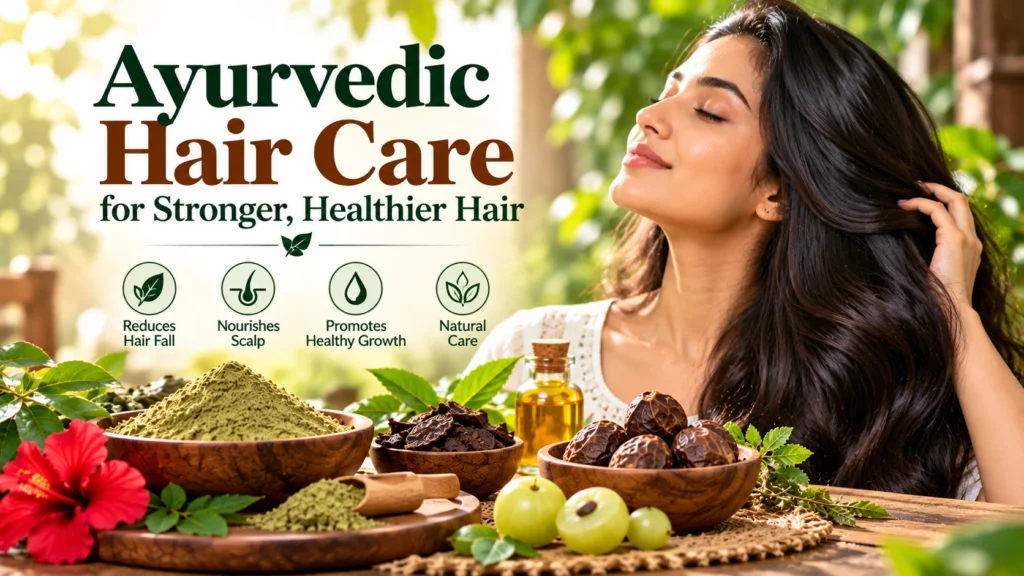
Ayurvedic Hair Care: Bhringraj, Amla & Traditional Herbs Explained
Ayurvedic hair care often combines scalp massage, botanical oils and herbs such as Bhringraj and Amla. These practices have a long traditional history, but traditional use is not the same as proof that an herb treats hair loss. This guide separates those two ideas so you can build a sensible routine without overpromising what herbal products can do.
Why Bhringraj and Amla Are Popular in Ayurvedic Hair Care
Bhringraj (Eclipta prostrata/alba) is traditionally used in Ayurvedic hair oils and scalp-care preparations. Amla (Phyllanthus emblica), also called Indian gooseberry or Amalaki, is used both as a food and in traditional wellness preparations. Modern reviews identify both plants as interesting candidates for hair research, but the human clinical evidence for individual herbs remains limited.
Bhringraj: Traditional Use vs Modern Evidence
In Ayurveda, Bhringraj-containing oils are commonly associated with scalp massage and hair conditioning. A recent randomized study of a multi-herb Neeli Bhringraj oil reported improvements in several hair measures over 120 days. However, because the formulation contained multiple ingredients, the study does not establish that Bhringraj alone produces the same effects. More independent, larger trials are needed.
How it is commonly used
Bhringraj is most often encountered in topical oils. If trying a new oil, follow its label, patch-test a small area first and stop if you develop persistent redness, itching or irritation.
Amla: More Than a Hair-Care Ingredient
Amla is a nutrient-rich fruit used traditionally in foods, tonics and hair preparations. Laboratory and preclinical research has explored its antioxidant and botanical properties, and recent reviews of medicinal plants discuss Phyllanthus emblica in relation to hair biology. That is promising research territory—not evidence that an Amla tablet or oil will reverse a diagnosed hair-loss condition.
Oral Amla vs topical Amla
Topical oils and oral supplements are not interchangeable. Their ingredients, concentrations and safety considerations differ. For an oral supplement, use the manufacturer’s serving directions rather than extrapolating from a hair-oil tradition.
Featured Ayurveda Health Mart Product
Himalaya Amalaki – 60 Tablets
For shoppers specifically looking for an oral Amalaki/Amla product, see the live product page for the current label, pack information and directions. This is a wellness product highlight, not a claim that the supplement treats hair loss.
Other Traditional Herbs You May See
Neem
Neem frequently appears in traditional skin and scalp products. It should not be assumed to treat dandruff, infection or hair loss simply because it is botanical. If you are considering an oral neem product, check the label carefully and discuss use with a clinician when you take medicines or have an ongoing condition. Ayurveda Health Mart also lists Himalaya Neem.
Herbal oils and scalp massage
Massage can be a pleasant part of a grooming routine and oils can help condition the hair shaft and scalp. That cosmetic benefit should be distinguished from stimulating new follicular growth.
What Does Modern Research Actually Say?
Research on plant-derived approaches to hair loss is growing, but the evidence varies enormously by ingredient and formulation. A 2026 systematic review of dietary supplements for androgenetic alopecia found potential benefits for some studied supplements, while also calling for larger, high-quality trials. Those findings cannot simply be transferred to every Ayurvedic herb or commercial product.
A broader 2026 review identified Bhringraj and Amla among plants with experimental or mechanistic interest in alopecia research, while emphasizing the need for clinical validation and standardization. In practical terms, herbal hair care is better viewed as supportive grooming or wellness unless a specific product has convincing clinical evidence for a specific outcome.
How to Build a Practical Ayurvedic-Inspired Hair Routine
- Start with the scalp. Use a gentle cleansing routine suited to your scalp type.
- Add one new botanical product at a time. This makes irritation easier to identify.
- Patch-test topical products. Botanical does not automatically mean non-irritating.
- Be consistent, not aggressive. Excessive rubbing, heat and tight hairstyles can damage hair.
- Look for the cause of persistent hair loss. Genetics, thyroid disease, iron deficiency, medications, hormonal changes and scalp disorders can all matter.
When Hair Loss Needs Professional Care
See a dermatologist or other qualified clinician for sudden shedding, bald patches, scalp pain, scarring, marked itching or scaling, or hair loss that continues without an obvious explanation. Supplements should not delay assessment of an underlying condition.
Pregnant or breastfeeding people, children, people with chronic medical conditions, and anyone taking prescription medicines should seek professional advice before using oral herbal supplements. NCCIH also notes that some Ayurvedic preparations have been found to contain potentially harmful levels of metals, which makes product quality and sourcing important.
FAQs
Is Bhringraj proven to regrow hair?
No. Bhringraj has traditional use and emerging research interest, including studies of multi-herb formulations, but evidence is not strong enough to promise hair regrowth from Bhringraj alone.
Can I use Amla and Bhringraj together?
They are commonly combined in traditional hair products. Whether that combination is appropriate depends on the formulation and how it is used. Patch-test topical products and follow label directions.
Can Amla supplements stop hair fall?
There is not enough high-quality clinical evidence to say that an Amla supplement stops hair loss. Persistent or significant shedding deserves evaluation for the underlying cause.
How long should I try an Ayurvedic hair routine?
Hair changes occur slowly. Focus first on tolerability and a sustainable routine rather than expecting rapid growth claims. If hair loss is worsening, seek medical assessment rather than waiting for a supplement to work.
Choosing Ayurvedic Hair Products More Carefully
Look for a clear ingredient list, manufacturer information, sensible directions and traceable sourcing. Avoid products promising guaranteed regrowth or a cure for every type of hair loss. You can browse the Ayurveda & Wellness Blog for more evidence-aware guides and compare the store’s Amalaki product information before deciding whether it fits your wellness routine.
Considering Amla? Review the product label and directions on the Himalaya Amalaki page, and discuss oral supplements with a health professional if you use medicines or have a medical condition.
References
- NCCIH: Ayurvedic Medicine—In Depth
- PubMed: randomized clinical study of a Neeli Bhringraj polyherbal hair oil
- PubMed: review of medicinal plants and phytomolecules studied for alopecia
- PubMed: systematic review and network meta-analysis of dietary supplements for androgenetic alopecia
Medical note: This article is educational and does not diagnose or treat disease. Traditional Ayurvedic use and modern clinical evidence are identified separately where possible.