
Henna and indigo are two of the best-known plant powders used for colouring hair. They are often chosen by people looking for a more traditional approach to hair colour, but getting a predictable result depends on understanding what each powder actually does, how they are combined, and how your starting hair colour affects the outcome.
This guide explains the difference between henna and indigo, common one-step and two-step approaches, realistic colour expectations, and important safety precautions. Plant-based does not automatically mean reaction-free, so always follow the directions supplied with the specific product you use.
Henna vs Indigo: What Is the Difference?
Henna (traditionally derived from Lawsonia inermis) deposits warm copper, auburn or reddish-brown tones on the hair. It does not bleach or lighten your natural pigment.
Indigo (traditionally derived from Indigofera tinctoria) contributes cooler blue-dark tones. In hair-colour routines it is commonly used with or after henna to move the final shade toward brown or darker tones.
The result is not identical on every person. Grey percentage, natural hair colour, previous chemical colouring, porosity, powder quality, preparation and application time can all influence the finished shade.
Can You Mix Henna and Indigo Together?
Many people use the powders either in a single combined application or as a two-step process. A combined henna-indigo mixture is commonly used when the goal is a brown-family result. A two-step approach—henna first and indigo afterwards—is often chosen when someone wants a deeper, darker result or is trying to cover resistant grey hair.
One-step method
Henna and indigo are prepared according to their respective package directions and combined for application. The proportion of each powder influences the general direction of the shade: more henna tends to keep the result warmer, while a higher proportion of indigo tends to make it darker and cooler.
Two-step method
The hair is first coloured with henna, rinsed, and then treated with indigo according to product directions. Because individual results vary substantially, a hidden strand test is especially useful before colouring the full head.
How to Use Henna and Indigo More Predictably
1. Start with clean hair
Heavy oils, silicone-rich styling products and buildup may interfere with even contact. Follow the preparation directions on your chosen powder and avoid improvising with strong additives.
2. Do a strand test first
A strand test helps you see the likely colour on your hair before committing to a full application. It is particularly important for grey, highlighted, bleached or previously dyed hair.
3. Follow the product’s mixing directions
Preparation instructions can differ between products. Use the recommended liquid, mixing method and timing rather than assuming all henna or indigo powders behave identically.
4. Apply evenly and wear gloves
Work systematically from roots through lengths so the paste coats the intended areas evenly. Gloves help prevent staining of the hands.
5. Rinse thoroughly
Do not leave any hair-colour preparation on longer than directed. The U.S. FDA advises users of hair dyes to follow package instructions, wear gloves and rinse the scalp thoroughly after colouring.
What Colour Can You Expect?
Henna alone generally moves hair toward warm copper-to-auburn tones rather than lighter shades. Combining it with indigo can produce brown-to-dark results, but there is no universal formula that guarantees an exact shade. White and grey strands may initially look brighter than pigmented hair and can create a naturally highlighted appearance.
Because plant pigments build on the colour already present, a photograph on a package or website should be treated as a guide rather than a guaranteed result.
Shop the Hair Colour Routine
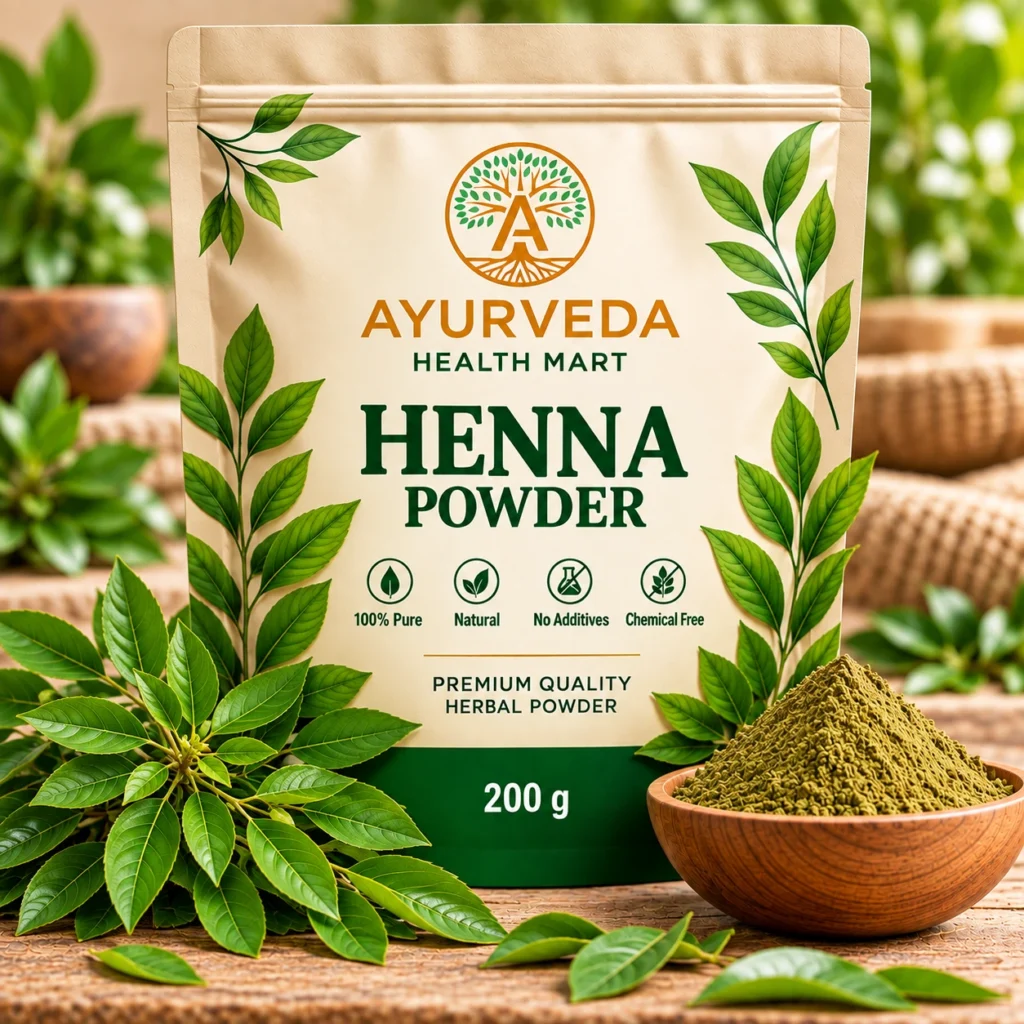
Ayurveda Health Mart Henna Powder – 200 g
View Henna Powder
Ayurveda Health Mart Indigo Powder – 200 g
View Indigo Powder
Natural Hair Colour Bundle – Henna + Indigo + Amla
View the Hair Colour Bundle
Amla Powder – 200 g
View Amla Powder
Henna, Indigo and Amla: Why Are They Often Seen Together?
Amla is a traditional Ayurvedic ingredient frequently included in hair-care routines. It should not be treated as a guaranteed colour modifier or hair-growth treatment. If you are building a broader botanical routine, read our guide to Amla, Bhringraj and traditional Ayurvedic hair-care herbs.
Safety: Natural Hair Colour Still Requires Care
Do not assume that every product labelled “henna” contains only henna. The FDA notes that henna naturally gives a brown, orange-brown or reddish-brown colour, while products marketed as “black henna” may contain added ingredients such as PPD that can cause dangerous skin reactions in some people. The NHS likewise identifies PPD as a common cause of hair-dye reactions.
Before using any hair-colour product, read the complete ingredient list and follow its safety instructions. The FDA recommends a skin patch test before hair dye use and advises repeating the test each time. A strand test is also useful for assessing colour. Stop use if you develop irritation or a reaction, and seek urgent medical help for symptoms of a severe allergic reaction such as swelling of the mouth or throat or difficulty breathing.
Authoritative references: FDA: Cosmetics Safety Q&A — Hair Dyes; FDA: Henna and “Black Henna” Fact Sheet; NHS: Hair Dye Reactions.
Frequently Asked Questions
Can henna lighten dark hair?
No. Henna deposits colour; it is not a bleaching agent. On naturally dark hair, the visible effect may be a warm tint rather than a dramatic colour change.
Do I need henna before indigo?
Not in every routine. Henna and indigo may be combined for brown-family shades, while a sequential henna-then-indigo process is commonly used for darker results. Follow the directions for the powders you purchase and strand-test first.
Can henna and indigo cover grey hair?
Plant dyes can visibly colour grey strands, but coverage and final shade vary with the hair and application method. A strand test is the best way to preview your individual result.
Is “black henna” the same as indigo?
No. The terms should not be treated as interchangeable. The FDA warns that products marketed as “black henna” may contain added PPD. Check the ingredient list rather than relying on the colour name.
Should I patch test a plant-based hair powder?
Yes. Botanical ingredients can still cause sensitivity, and mixed hair-colour products may contain additional ingredients. Follow the product’s allergy-testing instructions before use.
Bottom Line
Henna and indigo can be useful options for people interested in traditional plant-based hair colouring, but the best results come from realistic expectations and careful preparation. Know what is in the product, strand-test before a full application, follow the supplied directions and treat safety precautions as essential rather than optional.
This article is for general educational purposes and does not replace advice from a dermatologist or other qualified healthcare professional, particularly if you have a history of allergy, eczema, scalp disease or previous reactions to hair dye.