Multani Mitti for Face: How to Use Fuller’s Earth Safely in a Simple Skin-Care Routine
Multani Mitti, often called Fuller’s earth, has a long history in South Asian beauty routines. Its fine mineral-rich texture is commonly mixed with water or other simple ingredients and applied as a rinse-off face mask. But traditional popularity is not the same as proof that it treats acne, pigmentation or other skin conditions.
This practical guide explains how to use Multani Mitti conservatively, who may want to avoid it, and how it differs from adding botanical powders such as rose petal powder. Explore more ingredient guides on the Ayurveda Health Mart blog.
What Is Multani Mitti?
Multani Mitti is a type of absorbent clay traditionally used for cleansing and cosmetic skin care. In an Ayurvedic-inspired routine, it is generally used externally as a short-contact mask rather than taken internally.
Modern clinical evidence specifically testing Multani Mitti for common skin disorders is limited. It is therefore more accurate to describe it as a traditional cosmetic ingredient than as a treatment for acne, eczema, pigmentation or infection.
Why Do People Use It on the Face?
The main practical appeal is its absorbent feel. A clay mask can temporarily remove surface oil and leave skin feeling less greasy. That cosmetic effect should not be confused with changing the underlying causes of acne or permanently changing pore size.
Traditional use versus clinical evidence
Traditional beauty practices commonly use clays and plant powders for cleansing and appearance. However, traditional use alone does not establish clinical effectiveness. If you have persistent acne, dermatitis, painful lesions or unexplained pigmentation, a dermatologist can help identify the cause and evidence-based options.
How to Use Multani Mitti as a Simple Rinse-Off Mask
- Start with a small amount of powder in a clean bowl.
- Add enough plain water to make a smooth, spreadable paste.
- Apply a thin layer to clean, intact skin, avoiding the eyes, lips and broken or irritated areas.
- Follow the product directions and avoid deliberately leaving a clay mask on until the skin feels painfully tight or irritated.
- Rinse gently with lukewarm water and pat dry rather than scrubbing.
- Apply a simple moisturizer afterward if your skin feels dry.
If this is your first time using a new cosmetic ingredient, try it cautiously on a small area first. FDA notes that cosmetics can cause irritation or allergic reactions in some people and recommends checking labels and following product directions.
Multani Mitti vs Rose Petal Powder
These powders are used differently in traditional beauty routines. Multani Mitti is primarily chosen for its clay-like, absorbent properties. Rose petal powder is a botanical powder commonly incorporated into cosmetic masks for its sensory and traditional skin-care appeal. Neither should be presented as a proven treatment for a medical skin condition.
People with dry or easily irritated skin may find frequent clay use uncomfortable. Adding more ingredients to a homemade mask does not automatically make it safer or more effective.
Products for a Simple Traditional Skin-Care Routine
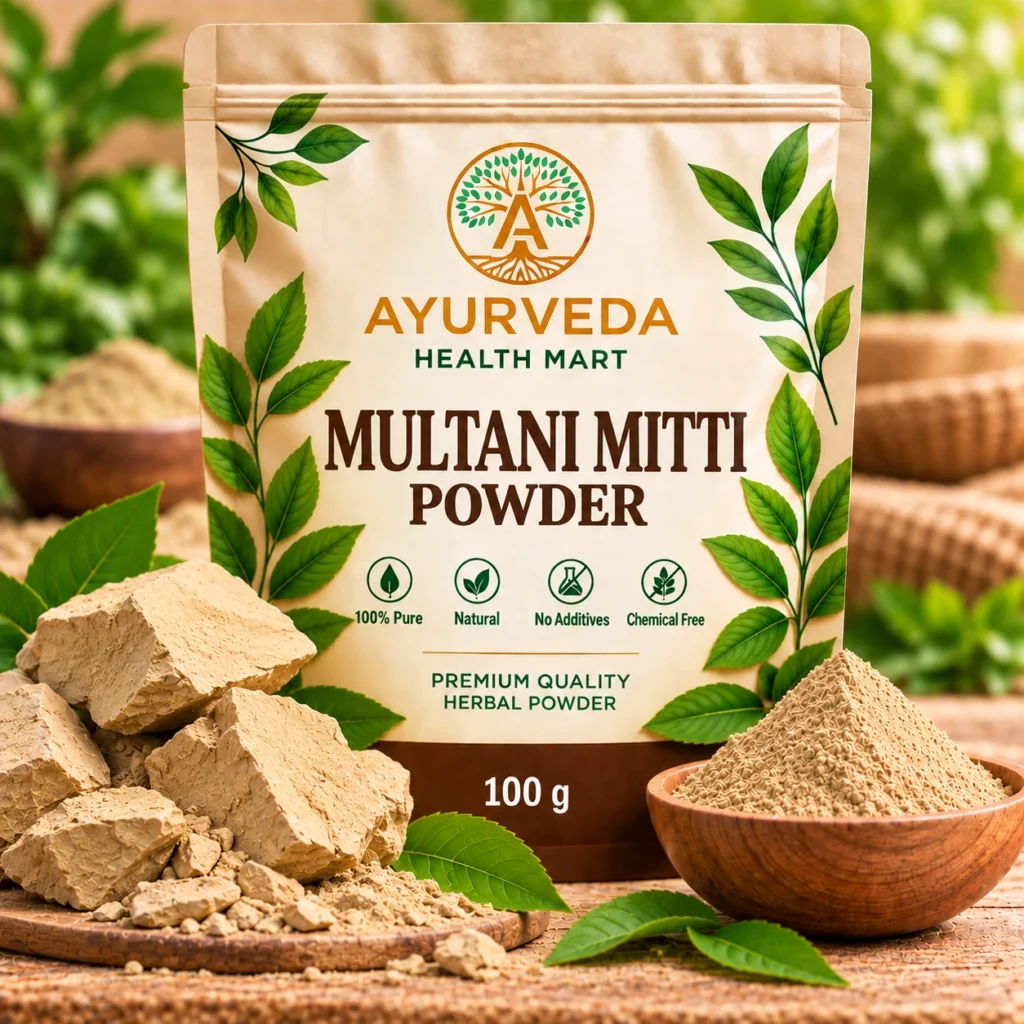
Ayurveda Health Mart Multani Mitti Powder – 100 g
Single-ingredient Fuller’s earth powder for external cosmetic use.
Ayurveda Health Mart Rose Petal Powder – 200 g
A botanical powder for traditional cosmetic routines.
Always follow the individual product label. Cosmetic use does not imply treatment of a skin disease.
Who Should Be More Cautious?
Use extra caution if your skin is very dry, reactive, sunburned or already irritated. Avoid applying powders over broken skin. Stop use if you develop persistent burning, swelling, hives, a worsening rash or other unexpected symptoms.
FDA advises that cosmetic products can trigger contact dermatitis and other reactions. If a reaction occurs, stop using the product; significant or persistent reactions warrant medical advice.
Common Mistakes to Avoid
Using it every day because skin is oily
More frequent use is not necessarily better. Excessive cleansing or repeated drying can leave some people uncomfortable or irritated. Start conservatively and adjust based on how your skin responds.
Mixing several strong DIY ingredients together
Lemon juice, essential oils, fragrances and multiple botanical ingredients can complicate a routine and may increase irritation for some users. A simpler mixture makes it easier to identify what your skin tolerates.
Using it to replace acne or eczema treatment
A cosmetic mask should not replace prescribed treatment. Claims to treat or prevent disease are different from cosmetic claims; FDA distinguishes products intended for appearance or cleansing from products intended to treat disease.
Frequently Asked Questions
Can Multani Mitti remove acne?
There is not good clinical evidence that Multani Mitti cures acne. It may absorb surface oil, but acne has multiple causes and persistent or inflammatory acne may need appropriate medical care.
How often should I use Multani Mitti?
There is no evidence-based universal frequency. Start infrequently, follow the product directions and reduce or stop use if you notice dryness or irritation.
Can dry skin use Multani Mitti?
Possibly, but absorbent clay may feel drying. People with dry or sensitive skin should be especially conservative and discontinue use if the skin becomes tight, flaky or irritated.
Can I mix Multani Mitti with rose petal powder?
They are sometimes combined in traditional cosmetic routines, but combining them has not been proven to treat skin disease. Introduce new ingredients cautiously so you can identify any irritation.
A Practical Takeaway
Multani Mitti can fit into a simple traditional rinse-off skin-care routine when used sensibly. Keep expectations cosmetic rather than medical, use it on intact skin, avoid aggressive DIY mixtures, and stop if irritation develops.
If you want to build a straightforward routine, compare Multani Mitti Powder with Rose Petal Powder, and see our existing Kumkumadi Oil guide for another traditional skin-care format.
References
- U.S. FDA: Allergens in Cosmetics.
- U.S. FDA: Product Testing of Cosmetics.
- U.S. FDA: Is It a Cosmetic, a Drug, or Both?.
This article is for general educational information and cosmetic-use guidance. It is not medical advice and is not intended to diagnose, treat, cure or prevent disease.