Moringa leaf powder has moved from a traditional food ingredient to a popular everyday wellness product. But if you have bought a pouch and are wondering how to actually use it, the most useful approach is simple: treat moringa as a food-based botanical, not as a medicine or a shortcut for a balanced diet.
This guide explains practical ways to use moringa leaf powder, what current research suggests, and the situations where extra caution makes sense.
What is moringa leaf powder?
Moringa leaf powder is made from dried leaves of Moringa oleifera, a plant widely used as food and in traditional practices in South Asia and Africa. The leaves contain naturally occurring plant compounds and nutrients, but their exact composition can vary with growing conditions, processing and storage.
A 2022 systematic review described a broad range of phytochemicals in moringa while also emphasizing an important limitation: human clinical evidence remains much smaller than the laboratory and animal evidence. That means moringa should not be presented as a proven treatment for disease.
How to use moringa leaf powder
1. Add it to a smoothie
Its earthy, green taste pairs well with banana, mango, berries, yogurt or plant-based milk. Start with the serving suggested on your product label rather than assuming that more is better.
2. Stir it into yogurt or breakfast bowls
A small amount can be mixed into yogurt, oats or other foods. Combining it with familiar foods is often easier than drinking the powder in plain water.
3. Mix it into soups or savoury foods
Moringa can also be used as a food ingredient in soups, dals and sauces. Avoid relying on it as the main nutritional component of a meal; dietary variety still matters.
4. Build a consistent routine rather than chasing a high dose
There is no universally established therapeutic dose of moringa leaf powder for general wellness. Human studies have used different preparations and amounts, so follow the specific product label and discuss regular supplementation with a qualified clinician if you take medicines or manage a health condition.
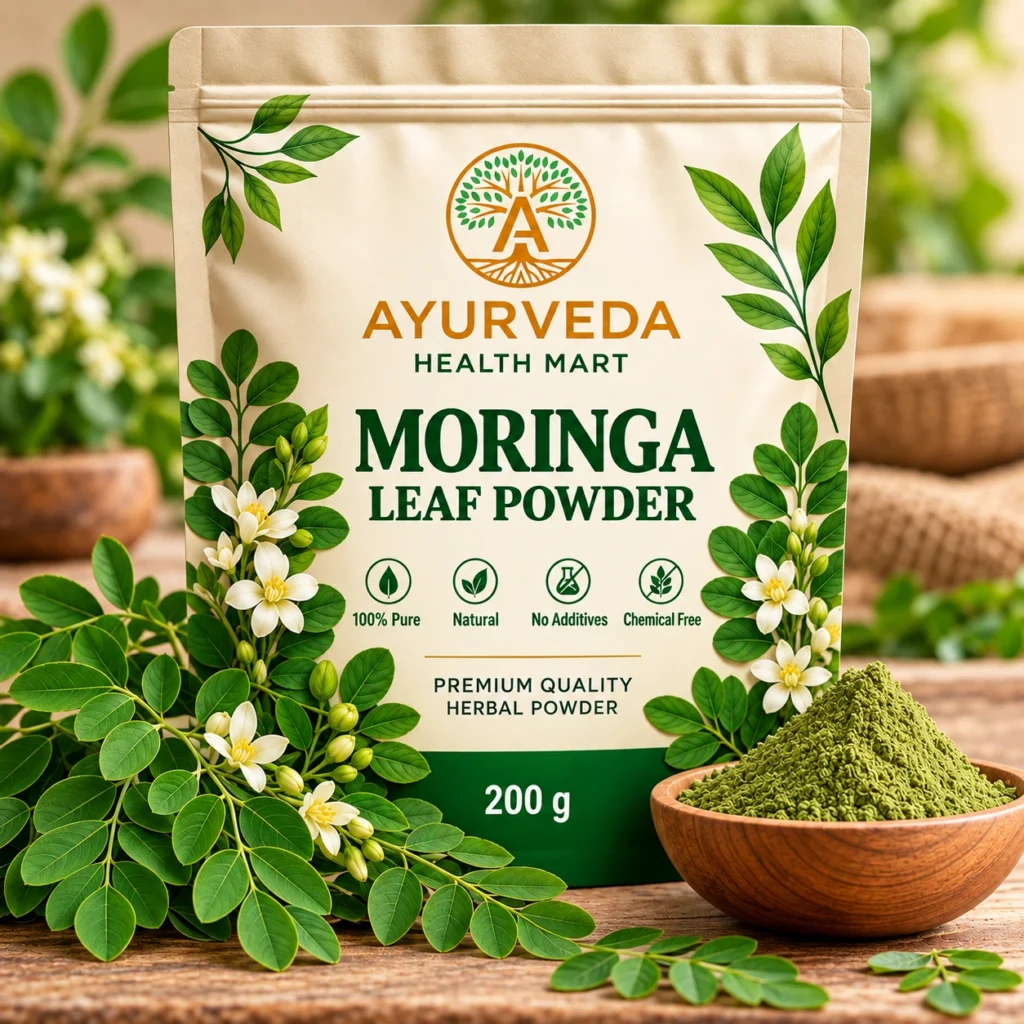
Featured at Ayurveda Health Mart
Ayurveda Health Mart Moringa Leaf Powder – 200 g
A straightforward moringa leaf powder option for customers who prefer a flexible powder format that can be incorporated into food or drinks. Use according to the product label.
Looking for a broader food-powder combination? See the Daily Superfood Bundle – Moringa + Amla + Beetroot.
What does the evidence actually say?
Moringa is frequently marketed with very broad health claims, but the evidence needs context. A systematic review of moringa leaf supplementation found some potentially useful nutritional findings, while noting that the human evidence base was limited and that larger, better trials are needed.
A more recent meta-analysis of randomized trials reported that moringa supplementation did not consistently improve major cardiometabolic outcomes in adults. That is a useful reminder that a promising botanical is not the same thing as a clinically proven treatment.
For background reading, see the systematic review of Moringa oleifera on PubMed and the systematic review of moringa leaf supplementation and nutrition.
Moringa powder vs capsules: which format makes sense?
Powder is useful when you want to incorporate moringa into food and adjust the amount within label directions. Capsules can be more convenient when taste or portability is the priority. Neither format is automatically more effective; formulation quality, actual ingredient amount and intended use matter more than marketing language.
If you are comparing botanical formats generally, our Neem Powder vs Neem Capsules guide explains a similar decision framework.
Who should be cautious?
Food use and concentrated supplementation are not always equivalent. If you are pregnant or breastfeeding, have a chronic medical condition, or take prescription medicines—particularly medicines affecting blood glucose or blood pressure—speak with a qualified healthcare professional before using moringa regularly as a supplement. Do not replace prescribed treatment with moringa.
Choose products that clearly identify the plant part. Evidence and safety observations for moringa leaves should not automatically be applied to roots, bark, seeds or concentrated extracts.
How to choose a moringa powder
- Look for a clearly labelled Moringa oleifera leaf product.
- Prefer transparent ingredient lists without unnecessary blends or exaggerated disease-treatment claims.
- Check storage instructions and keep powder dry and properly sealed.
- Follow the labelled serving directions rather than self-escalating the amount.
Frequently asked questions
Can I take moringa powder every day?
Moringa leaves are used as food in many settings, but a universal long-term supplemental dose has not been established. Follow the product label and seek professional advice when regular supplementation overlaps with medicines, pregnancy, breastfeeding or medical conditions.
What is the best time to take moringa powder?
There is no well-established evidence that one time of day is universally superior. Practical consistency and tolerability are more important. Many people simply add it to a meal or smoothie.
Can moringa replace a multivitamin?
No. Nutrient content varies between moringa products, and it should not be assumed to provide all vitamins and minerals in clinically meaningful amounts. Think of it as a food-based botanical rather than a complete nutritional replacement.
Does moringa treat diabetes or high blood pressure?
Current evidence does not justify using moringa as a replacement for established treatment. Research is ongoing, and findings from laboratory, animal or small human studies should not be converted into treatment claims.
Bottom line
Moringa leaf powder can be an easy botanical food addition when used sensibly. The most practical approach is to choose a clearly labelled leaf powder, follow its directions, incorporate it into an otherwise varied diet and keep expectations evidence-aware. If you use medicines or have a medical condition, professional guidance is more important than increasing the dose.
This article is for general educational purposes and is not medical advice. Herbal products can interact with medicines and may not be suitable for everyone.