Neem (Azadirachta indica) has a long history of traditional use, and today it is commonly sold as leaf powder, tablets and capsules. If you are shopping for neem, the practical question is often not simply “What is neem used for?” but “Should I choose neem powder or capsules?”
The answer depends on how you intend to use it, how much convenience matters to you, and whether you prefer a minimally processed powder or a pre-measured format. This guide compares the formats without treating either one as a substitute for medical care.
Neem Powder vs Capsules: Quick Comparison
| Feature | Neem Leaf Powder | Neem Capsules/Tablets |
|---|---|---|
| Format | Loose ground leaf | Pre-measured solid dose |
| Convenience | Requires measuring | Easy to carry and use |
| Flexibility | Can be incorporated into traditional or topical routines where appropriate | Primarily intended for oral use according to the product label |
| Taste | Distinctly bitter | Usually avoids most of the taste |
| Best for | People who specifically want a versatile leaf powder | People prioritising convenience and consistency |
What Is Neem Leaf Powder?
Neem leaf powder is made from dried, ground neem leaves. It is different from neem seed oil, and that distinction matters: products made from different parts of the plant can have different compositions and safety profiles.
Traditional systems have used neem in several ways, while modern research has investigated its constituents for antimicrobial, antioxidant and other biological activity. However, laboratory findings do not automatically establish that neem treats a particular condition in people. A dermatology review indexed in PubMed discusses traditional and modern research on neem while also highlighting the need for appropriate formulation and clinical evidence.
Why Choose Neem Powder?
1. A simple ingredient format
Some shoppers prefer products with a short ingredient list. A single-herb leaf powder can make it easier to see exactly what the product contains.
2. More flexibility
Powder provides more flexibility than a capsule, but that flexibility also means users need to follow the product directions carefully rather than assuming that more is better.
3. Useful for shoppers comparing traditional herbal formats
If your goal is to build a pantry of individual Ayurvedic powders rather than take ready-made tablets, powder may fit that preference better.
Why Choose Neem Capsules or Tablets?
1. Convenience
Capsules and tablets are easier to take while travelling and do not require measuring a loose powder.
2. Pre-measured servings
A labelled solid-dose product provides a defined serving size. That does not mean every neem capsule from every manufacturer is equivalent: extract strength, leaf quantity and additional ingredients can vary.
3. No bitter powder taste
Neem is naturally bitter, so customers who dislike its taste often find capsules or tablets easier to use.
Shop Neem at Ayurveda Health Mart
Prefer a versatile powder?
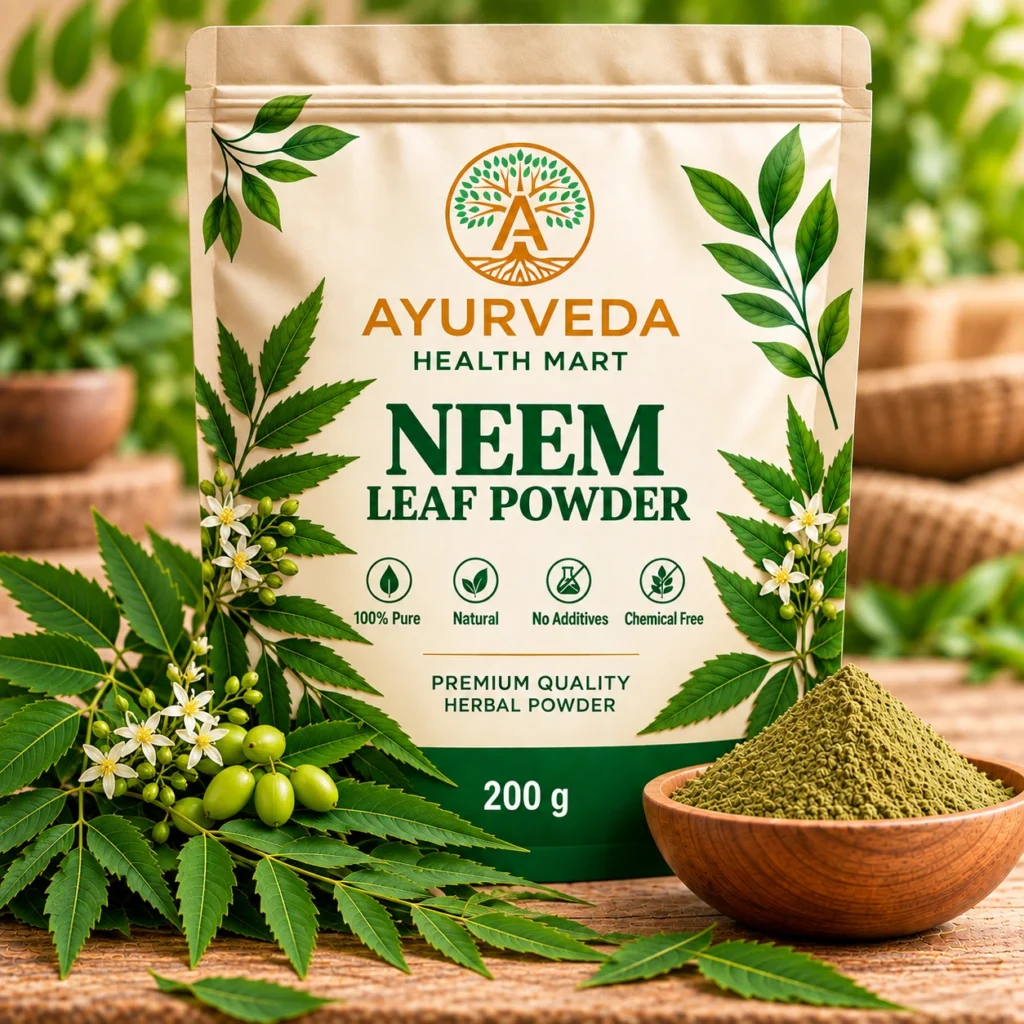
Ayurveda Health Mart Neem Leaf Powder – 200 g
Prefer capsules?
Organic India Neem – 90 Vegetarian Capsules
Prefer tablets?
Himalaya Neem – 60 Tablets
Choose a format based on the label, your intended use and professional advice where appropriate. Product availability may change.
What Should You Check Before Buying Neem?
Plant part and format
Check whether the label specifies neem leaf, an extract, or another plant part. Do not assume leaf powder and neem oil are interchangeable.
Ingredient list
Look for added herbs, fillers or excipients if you want a single-ingredient product.
Clear directions
A reputable product should provide serving or use instructions. Avoid increasing intake simply because a product is plant-derived.
Storage and packaging
Keep herbal powders dry and tightly closed, and follow the storage instructions on the pack.
Is Neem Safe for Everyone?
No herbal product should be assumed to be risk-free. Published reviews describe serious poisoning after ingestion of neem oil, particularly in children, and raise reproductive and pregnancy-related safety concerns for some neem preparations. Evidence on long-term oral use of many neem formulations remains limited.
For that reason, avoid self-prescribing concentrated neem products during pregnancy or breastfeeding, for young children, or when you have a medical condition or take medicines without first discussing it with a qualified healthcare professional. People using glucose-lowering medication should be particularly cautious because neem has been discussed in the literature in relation to blood-glucose effects.
For more background, see the PubMed review of dermatological applications of neem and the peer-reviewed toxicity review in PMC.
Neem Powder or Capsules: Which Is Better?
Neither format is universally “better.” Choose neem leaf powder when you specifically want a loose, versatile herbal format and are comfortable measuring it. Choose capsules or tablets when convenience, portability and a pre-measured serving are more important.
The bigger purchasing decision is quality and suitability: identify the plant part, read the complete label, follow directions, and consider whether neem is appropriate for you before using it.
Frequently Asked Questions
Is neem powder the same as neem capsules?
Not necessarily. A capsule may contain powdered neem leaf, a concentrated extract, or a blend. Compare the ingredient panel rather than assuming equal strength.
Can neem powder be used on skin or hair?
Neem has a history of topical use and is studied in dermatology, but suitability depends on the formulation and individual skin sensitivity. Avoid applying an oral product to damaged skin unless its directions specifically support topical use. Patch testing a suitable topical preparation can help identify irritation.
Can I take neem every day?
There is not one evidence-based daily regimen that applies to every neem preparation. Concentration and formulation vary, and long-term safety data are limited. Follow the specific label and seek professional advice if you plan ongoing oral use.
Is neem oil the same as neem leaf powder?
No. Neem oil is generally derived from seeds or kernels, whereas neem leaf powder comes from leaves. Their chemical composition and safety considerations differ, so they should not be treated as interchangeable.
Who should be cautious with neem?
Pregnant or breastfeeding people, children, people with ongoing medical conditions, and anyone taking medicines should seek professional advice before oral use. Neem oil should not be casually ingested.
Medical note: This article is educational and does not diagnose, treat or prevent disease. Herbal products can cause adverse effects and interact with medicines.